The best pork cuts for slow cooking
Not all pork is built for the slow cooker. Lean cuts like tenderloin turn dry and stringy after hours of low heat. But the right cuts — the ones loaded with fat, collagen, and connective tissue — transform into something remarkable: tender, juicy, and deeply flavourful. Understanding which cuts to choose, how long to cook them, and when to season is what separates a mediocre slow cooker meal from one that gets requested every week.
This guide covers everything: the best pork cuts for slow cooking, how each one behaves under low heat, cooking times and temperatures, the science of seasoning and herb timing, and how to layer flavour for genuinely restaurant-quality results.
Why Fat and Connective Tissue Matter in Slow Cooking
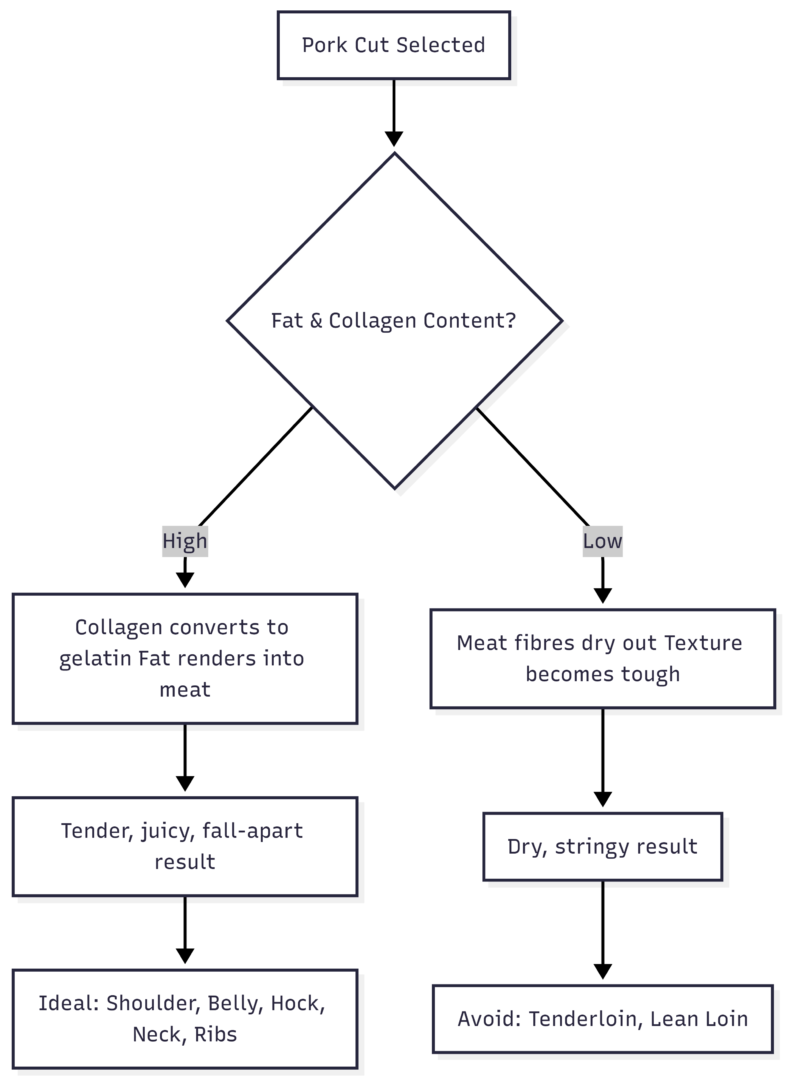
Slow cooking works through prolonged, moist heat. During this process, collagen — the tough protein found in connective tissue — gradually converts into gelatin. This gelatin coats the meat fibres, creating that silky, fall-apart texture that defines great pulled pork, braised hocks, and slow-cooked ribs.
Fat marbling does similar work. As the slow cooker heats over several hours, intramuscular fat renders out and bastes the meat from within. The result is moisture and richness that no amount of added liquid can replicate.
Lean cuts lack both. Without collagen to melt and fat to render, they simply dry out. This is why pork tenderloin and lean loin chops consistently disappoint in the slow cooker.
The Best Pork Cuts for Slow Cooking
1. Pork Shoulder (Boston Butt)
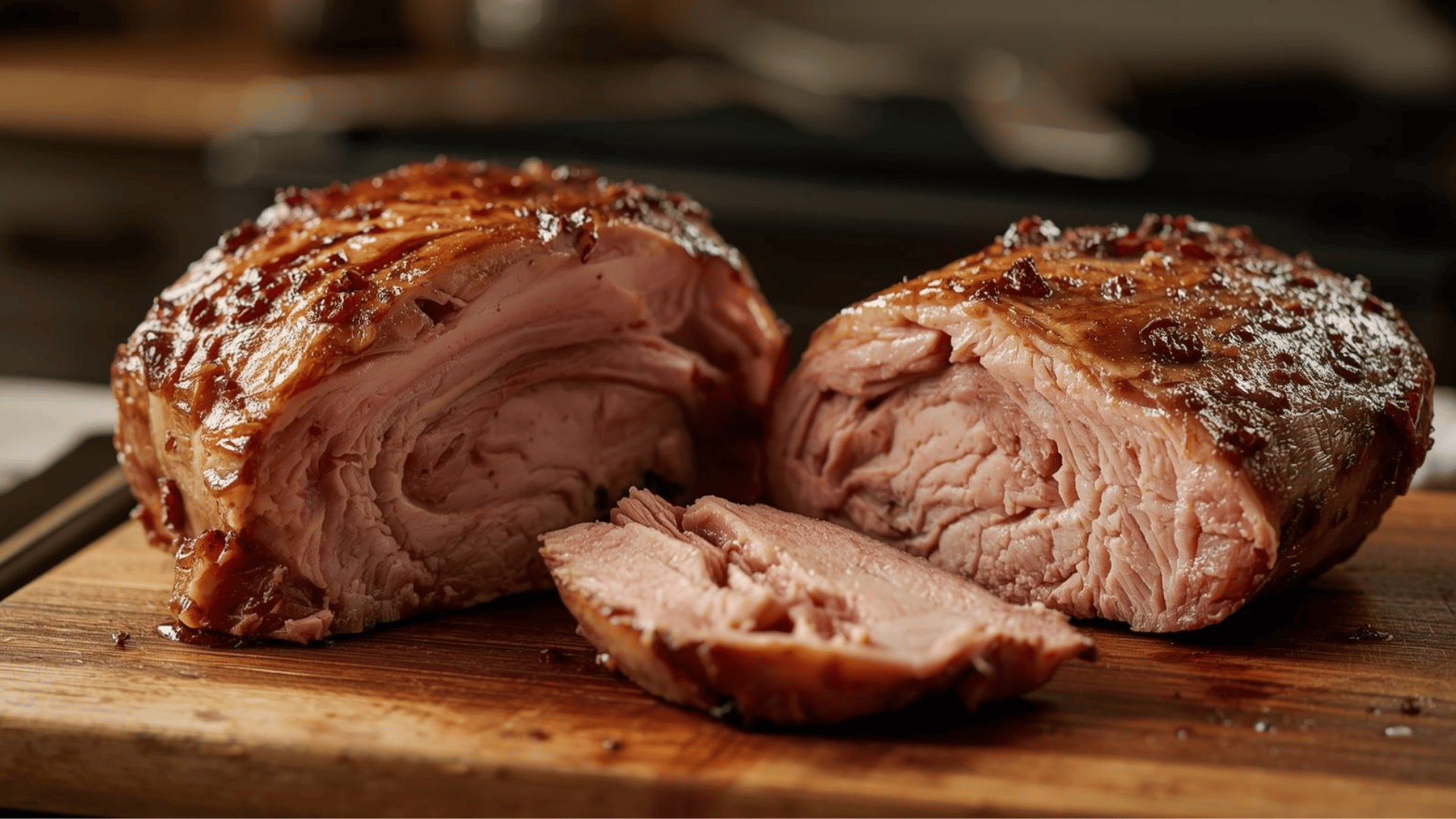
Pork shoulder — particularly the upper portion called the Boston Butt — is the definitive slow cooker cut. It is heavily marbled with fat and laced with connective tissue, both of which melt down over long cooking times to produce extraordinarily tender, shreddable meat.
It is the standard choice for pulled pork, and for good reason. After 8–10 hours on low, it pulls apart with nothing more than a pair of forks. The cooking juices left behind make an excellent base for sauce or gravy.
Best for: Pulled pork, tacos, stews, sandwiches
Slow cooker time: 8–10 hours on LOW or 4–5 hours on HIGH
Target internal temperature: 195–205°F (90–96°C) for pulling
Approximate cost: $3–$6 per kg (budget-friendly)
2. Pork Belly
Pork belly is one of the richest slow cooker cuts available. Its alternating layers of fat and meat slowly render together, creating a deeply savoury, almost buttery texture. The fat does not disappear — it incorporates into the dish, adding body and flavour to whatever liquid surrounds it.
One consideration: pork belly will not develop crispy skin in the slow cooker. If crackling matters, finish the cooked belly under a high grill for 5–6 minutes after removing it from the slow cooker. The skin will blister and crisp rapidly.
Best for: Braised dishes, ramen broths, Asian-style preparations
Slow cooker time: 7–8 hours on LOW
Target internal temperature: 170°F (77°C) minimum; richer at higher temps
Approximate cost: $5–$9 per kg
3. Pork Hock (Shank)
The hock comes from the lower leg and is packed with collagen and connective tissue. It is a tough, dense cut that becomes extraordinary after long, slow cooking. The collagen dissolves into rich gelatin, making it ideal for hearty soups, broths, and braises.
Pork hocks are often sold smoked, which adds an extra layer of depth. Browning them first before adding to the slow cooker makes a noticeable difference to the final flavour.
Best for: Soups, stews, braised dishes, split pea soup
Slow cooker time: 8–12 hours on LOW
Target internal temperature: 190°F+ (88°C+)
Approximate cost: $4–$7 per kg
4. Pork Neck (Scotch Fillet)
Pork neck — sometimes labelled scotch fillet or pork collar — is well-marbled and often underappreciated. It carries more fat than the loin but less than the belly, making it a versatile middle ground that suits braising, stews, and slow roasts equally well.
Its marbling keeps it moist across long cooking times without becoming overly fatty, and it holds its shape better than shoulder, making it useful when you want distinct pieces rather than pulled meat.
Best for: Stews, casseroles, braises, slow roasts
Slow cooker time: 6–8 hours on LOW
Target internal temperature: 185–195°F (85–90°C)
Approximate cost: $6–$10 per kg
5. Pork Ribs (Spare Ribs and Baby Back)
Ribs are a natural fit for the slow cooker. Low heat breaks down the connective tissue between the meat and bone, producing that coveted fall-off-the-bone tenderness that is difficult to achieve any other way without hours of oven work.
Baby back ribs are leaner and meatier. Spare ribs are fattier and more flavourful. Both work well. The key difference is that spare ribs benefit from a longer cook. After slow cooking, finish both under a grill or on a hot BBQ with sauce to develop the caramelised exterior.
Best for: BBQ ribs, sticky glazed ribs
Slow cooker time: 6–8 hours on LOW (spare ribs); 5–6 hours on LOW (baby back)
Target internal temperature: 190–203°F (88–95°C) for fall-off-the-bone
Approximate cost: $8–$14 per kg
6. Pork Cheeks
Pork cheeks are small, dense, and gelatin-rich. They are less commonly sold in mainstream supermarkets but are worth seeking out from a butcher. After 3–4 hours of gentle braising, they become almost spoonable — tender, intensely flavoured, and coated in their own silky sauce.
They suit refined, slow-cooked preparations: red wine braises, cider-based stews, or rich Spanish-style dishes with smoked paprika and chorizo.
Best for: Refined braises, dinner-party dishes
Slow cooker time: 4–6 hours on LOW
Target internal temperature: 185°F+ (85°C+)
Approximate cost: $10–$16 per kg (specialty cut)
Pork Cut Comparison Table
| Cut | Fat Content | Collagen | Best Method | Cook Time (LOW) | Cost (approx/kg) | Best Dishes |
|---|---|---|---|---|---|---|
| Pork Shoulder | High | High | Slow cooker / oven | 8–10 hrs | $3–$6 | Pulled pork, stews |
| Pork Belly | Very High | Medium | Slow cooker / braise | 7–8 hrs | $5–$9 | Braised dishes, ramen |
| Pork Hock | Medium | Very High | Slow cooker / braise | 8–12 hrs | $4–$7 | Soups, broths |
| Pork Neck | Medium–High | Medium | Slow cooker / stew | 6–8 hrs | $6–$10 | Stews, casseroles |
| Spare Ribs | High | High | Slow cooker + grill | 6–8 hrs | $8–$14 | BBQ ribs |
| Baby Back Ribs | Medium | Medium | Slow cooker + grill | 5–6 hrs | $8–$14 | BBQ ribs |
| Pork Cheeks | Medium | Very High | Slow cooker / braise | 4–6 hrs | $10–$16 | Refined braises |
| Pork Tenderloin | Very Low | Very Low | Grill / oven only | Not recommended | $10–$18 | Quick cook only |
Slow Cooker Settings: LOW vs HIGH
Most slow cooker recipes specify LOW heat as the preferred setting. The reason is straightforward: collagen conversion and fat rendering are gradual processes. Rushing them with HIGH heat compresses the fibres before they fully soften, resulting in meat that is cooked through but not truly tender.
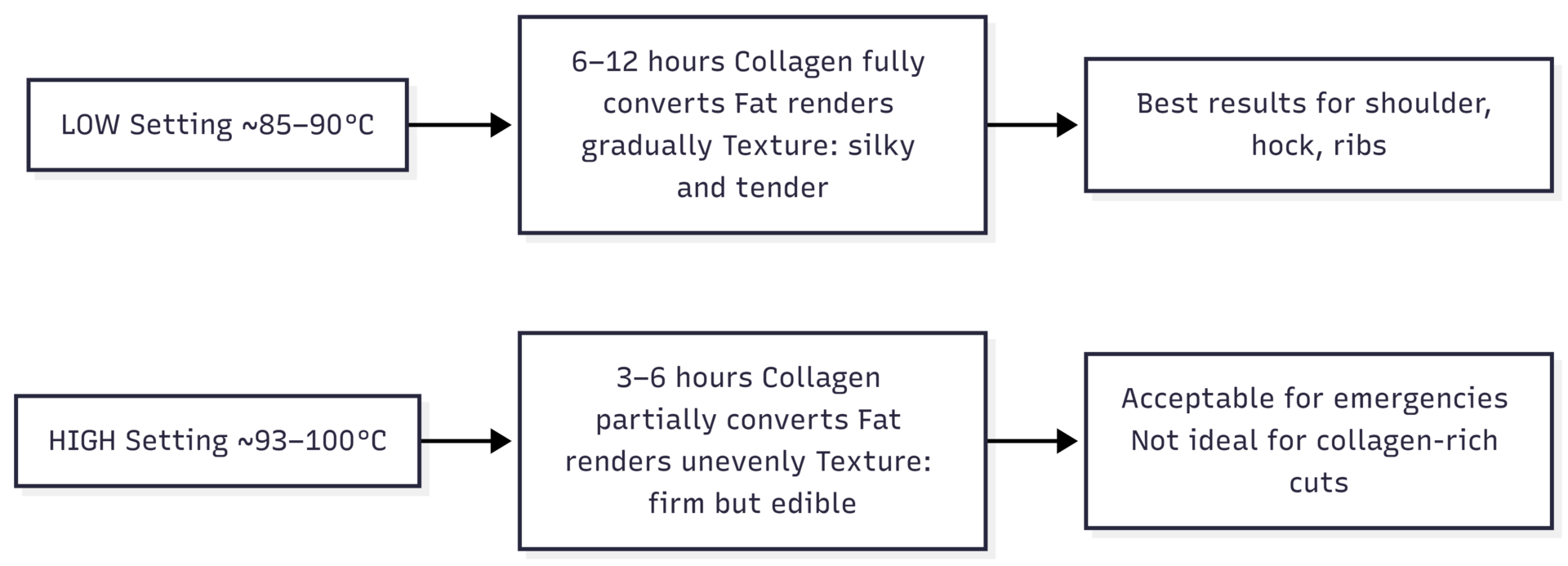
Reserve HIGH heat for days when time is short, not as a default. The texture difference is consistently noticeable, particularly in shoulder and hock.
Seasoning Timing: Early vs Late
One of the most debated aspects of slow cooking is when to add seasonings. The answer depends entirely on what you are adding.
Salt — Season Early
Salt does more than add flavour. Applied in advance, it draws moisture to the surface through osmosis, then reabsorbs into the meat, seasoning it from within. For large cuts like pork shoulder, salting several hours before cooking — or even overnight — produces noticeably more flavoured meat compared to seasoning only at the surface just before cooking.
In the slow cooker itself, add salt at the beginning. Long cooking concentrates flavours as liquid reduces, so start conservatively and adjust at the end if needed.
Herbs vs Spices: Different Timing Rules
Herbs and spices behave differently under heat, and treating them the same leads to flat, one-dimensional dishes.
Spices — Add Early
Whole and ground spices benefit from prolonged heat exposure. Compounds like cumin, coriander, smoked paprika, cinnamon, and star anise need time and fat to bloom — that is, to release their fat-soluble flavour compounds. Adding them at the start of a 6–10 hour cook allows this bloom to develop fully and infuse throughout the dish.
Toasting whole spices briefly in a dry pan before adding them amplifies this effect further.
Dried Herbs — Add Early to Mid Cook
Dried herbs like thyme, rosemary, oregano, and bay leaves are resilient. Their flavours are concentrated and release slowly. Add them early so they have time to rehydrate and integrate into the cooking liquid. Bay leaves in particular need several hours to contribute meaningfully.
Fresh Herbs — Add Late
Fresh herbs like parsley, basil, coriander, and chives are volatile. Their essential oils are fragile and dissipate quickly under heat. Add them in the final 15–30 minutes, or stir them in just before serving. Adding fresh herbs at the start of a long cook produces nothing but grey, flavourless plant matter.
Acidic Elements (Citrus, Vinegar, Wine) — Add Late
Acids brighten a dish and balance richness, but they also tighten meat proteins when applied too early and for too long. A squeeze of lemon juice, a splash of apple cider vinegar, or a dash of wine added in the final 30 minutes lifts the entire dish without toughening the meat.
Herb and Spice Timing Reference Chart

| Ingredient Type | When to Add | Why |
|---|---|---|
| Salt | At the start | Penetrates meat and seasons from within |
| Ground spices | At the start | Need heat to bloom and release fat-soluble flavour |
| Whole spices | At the start | Need long exposure to infuse liquid |
| Dried herbs (bay, thyme) | At the start | Robust; need time to rehydrate and release flavour |
| Dried herbs (oregano, rosemary) | Start to mid cook | Strong but can turn bitter over very long cooking |
| Fresh garlic and onion | At the start | Base aromatics; mellow and sweeten with long cooking |
| Fresh herbs (parsley, coriander) | Final 15–30 minutes | Volatile oils dissipate quickly under heat |
| Citrus juice, vinegar | Final 30 minutes | Brightens dish; prevents toughening of meat fibres |
| Chilli (fresh) | Final 30 minutes | Maintains fresh heat; early addition produces flat, dull heat |
| Soy sauce, fish sauce | Mid to late | Can become overly salty with full-duration cooking |
Flavour Layering in Slow Cooker Pork
Building genuine depth of flavour in a slow cooker requires thinking in stages rather than dumping everything in at once.
Stage 1: Sear the Meat
Browning pork before it enters the slow cooker is the single highest-impact step you can take. When pork surface hits a hot, dry pan, the Maillard reaction occurs: proteins and sugars combine to form hundreds of new flavour compounds that cannot develop in a moist slow cooker environment. That brown crust translates directly to savoury depth in the finished dish.
Sear the meat in batches in a hot pan with a small amount of oil. Do not crowd the pan. Each surface should spend 3–4 minutes in contact with the pan before turning.
Once the pork is seared, deglaze the pan with a splash of stock, wine, or cider. Scrape up every browned bit from the bottom — this is flavour that would otherwise be left behind.
Stage 2: Build the Base
The aromatics you add at the start of cooking form the flavour foundation. Standard choices include onion, garlic, celery, and carrot. These soften completely over long cooking, becoming almost invisible in texture while contributing sweetness and body to the cooking liquid.
Add whole spices and dried herbs at this stage. A combination like smoked paprika, cumin, dried thyme, and bay leaf creates a warm, complex baseline that the pork will absorb over hours.
Stage 3: Choose Your Liquid
The cooking liquid should complement the pork without drowning it. Slow cookers retain moisture efficiently — you need less liquid than you think. A standard rule: enough to come roughly 2–3 cm up the side of the meat, not to submerge it.
Good liquid choices for pork:
- Apple cider or apple juice — Sweetness balances richness; classic pairing for shoulder and belly
- Chicken or pork stock — Neutral, savoury base that works for virtually any preparation
- White or red wine — Adds acid and complexity; deglaze the searing pan first
- Beer (stout or amber ale) — Bitter, malty notes suit ribs and hocks particularly well
- Coconut milk — For Southeast Asian preparations; adds sweetness and body
Stage 4: Final Adjustments
Before serving, taste and adjust. Long cooking concentrates flavours, so dishes often need less seasoning than expected — but sometimes more acid, a touch of sweetness, or a final hit of fresh herbs to bring everything into balance.
Skim excess fat from the surface if needed. Stir in fresh herbs, a squeeze of citrus, or a small knob of butter to finish.

Best Practices Summary
- Choose the right cut. Pork shoulder, belly, hock, neck, ribs, and cheeks are built for the slow cooker. Avoid tenderloin and lean loin chops.
- Sear before cooking. Browning adds irreplaceable flavour depth. It takes 10 minutes and makes a significant difference.
- Use LOW heat. For cuts rich in collagen, LOW produces consistently better results than HIGH. Plan ahead.
- Don’t over-fill with liquid. The slow cooker creates its own moisture. Too much liquid dilutes flavour and produces watery sauces.
- Time your seasonings. Spices and dried herbs go in early. Fresh herbs, citrus, and acids go in late.
- Rest the meat before shredding. Give pulled pork or braised shoulder at least 10 minutes to rest before handling. Juices redistribute and the texture improves.
- Season the cooking liquid, not just the meat. The braising liquid becomes the sauce. It should taste good from the start.
Frequently Asked Questions
Do you need to add liquid to the slow cooker for pork?
A small amount of liquid is recommended to prevent scorching on the base of the insert — roughly 2–3 cm depth. The pork releases its own juices during cooking, so you do not need to submerge it.
Can you overcook pork shoulder in the slow cooker?
Yes. After 12+ hours on LOW, even shoulder will become dry and stringy rather than tender. Aim for the lower end of the recommended time range and check with a fork. It should pull apart with gentle pressure.
Should you remove the fat cap from pork shoulder before slow cooking?
A thin fat cap can stay — it renders during cooking and bastes the meat. A very thick cap (over 1 cm) is worth trimming before cooking, as it will not fully render and can make the finished dish greasy.
What is the difference between pork shoulder and pork butt?
Both come from the same section of the pig — the upper front leg and shoulder area. Pork butt (Boston Butt) comes from the upper portion and is more heavily marbled. Pork shoulder (picnic shoulder) comes from lower down and contains more connective tissue. Both are excellent slow cooker cuts; pork butt is generally preferred for pulled pork due to its higher fat content.
Can pork be slow cooked from frozen?
It is not recommended. Frozen pork takes significantly longer to reach safe temperatures, which means the outer portions of the meat spend extended time in the temperature danger zone (4–60°C / 40–140°F) where bacterial growth can occur. Always thaw pork fully before slow cooking.
The slow cooker rewards the cuts that the rest of the kitchen overlooks. Shoulder, belly, hock, and ribs are inexpensive, forgiving, and capable of extraordinary results when given time, the right aromatics, and properly timed seasoning. Start with a good sear, build your flavour base carefully, choose LOW heat, and let time do the work.
Please share this The best pork cuts for slow cooking with your friends and do a comment below about your feedback.
We will meet you on next article.
Until you can read, Best Cuts of Beef for Tender Slow Cooker Meals