Can You Reheat Food In A Slow Cooker?
Slow cookers have become a staple in many kitchens, prized for their ability to transform tough cuts of meat into tender meals and to simmer soups and stews with minimal effort. However, when it comes to reheating leftovers, the question arises: Can you safely reheat food in a slow cooker? The short answer is that while it’s technically possible, it’s not recommended by food safety experts due to the risks involved.
This comprehensive guide explores the science behind food safety, the dangers of improper reheating, alternative methods, and practical tips for using your slow cooker effectively. We’ll also delve into common user experiences, recommended slow cooker models with specifications and prices, and visual aids like charts to help you make informed decisions.
Understanding Slow Cookers and Their Design
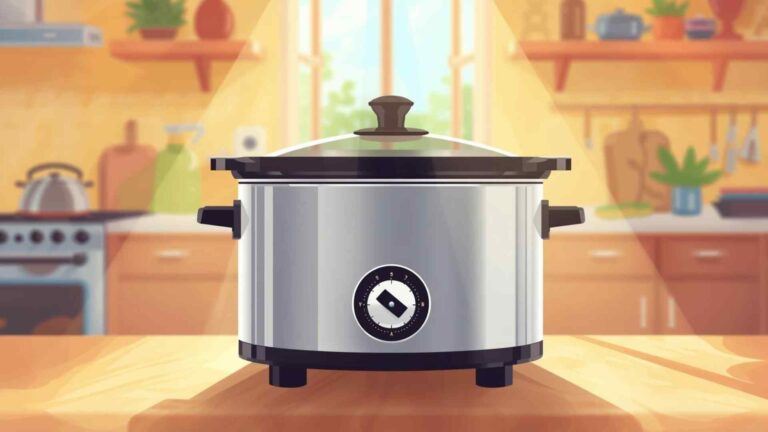
Slow cookers, often referred to as Crock-Pots (a brand name that has become synonymous with the appliance), are electric countertop devices designed for low-temperature, long-duration cooking. They typically consist of a removable stoneware or ceramic insert, a heating base, and a lid. The heating element wraps around the base, providing even, gentle heat that cooks food slowly over several hours.
The key settings on most slow cookers include “Low,” “High,” and “Warm.” The “Low” setting usually maintains temperatures around 170°F to 200°F (77°C to 93°C), while “High” reaches 200°F to 300°F (93°C to 149°C). The “Warm” setting keeps food above 140°F (60°C) without further cooking it. This design excels at breaking down connective tissues in meats and infusing flavors in dishes like chili, roasts, and casseroles.
However, this slow-heating mechanism is precisely what makes reheating problematic. Unlike microwaves or stovetops that can rapidly bring food to safe temperatures, slow cookers take time to heat up, especially when starting with cold leftovers. This prolonged exposure to moderate temperatures can promote bacterial growth, leading to foodborne illnesses.
Food Safety Basics: The Danger Zone Explained
To understand why reheating in a slow cooker is risky, it’s essential to grasp food safety fundamentals. Bacteria such as Salmonella, E. coli, and Clostridium perfringens thrive in what experts call the “danger zone”—temperatures between 40°F (4°C) and 140°F (60°C). In this range, bacteria can double in number every 20 minutes, potentially reaching harmful levels.
The USDA Food Safety and Inspection Service recommends reheating leftovers to an internal temperature of at least 165°F (74°C) to kill most pathogens. Once reheated, food should be held above 140°F (60°C) if not consumed immediately. Slow cookers, by their nature, don’t achieve this rapid temperature spike, keeping food in the danger zone for extended periods—often hours.
Here’s a simple table outlining key temperature guidelines for food safety:
| Temperature Range | Description | Recommendation |
|---|---|---|
| Below 40°F (4°C) | Refrigeration zone | Store leftovers here to slow bacterial growth. |
| 40°F to 140°F (4°C to 60°C) | Danger zone | Minimize time in this range; no more than 2 hours total (1 hour if ambient temperature is above 90°F/32°C). |
| Above 140°F (60°C) | Safe holding zone | Use for keeping food warm after proper reheating. |
| 165°F (74°C) or higher | Reheating target | Ensures most bacteria are destroyed. |
This table highlights why quick reheating methods are preferred. For visual representation, consider the following flowchart depicting the safe handling of leftovers:
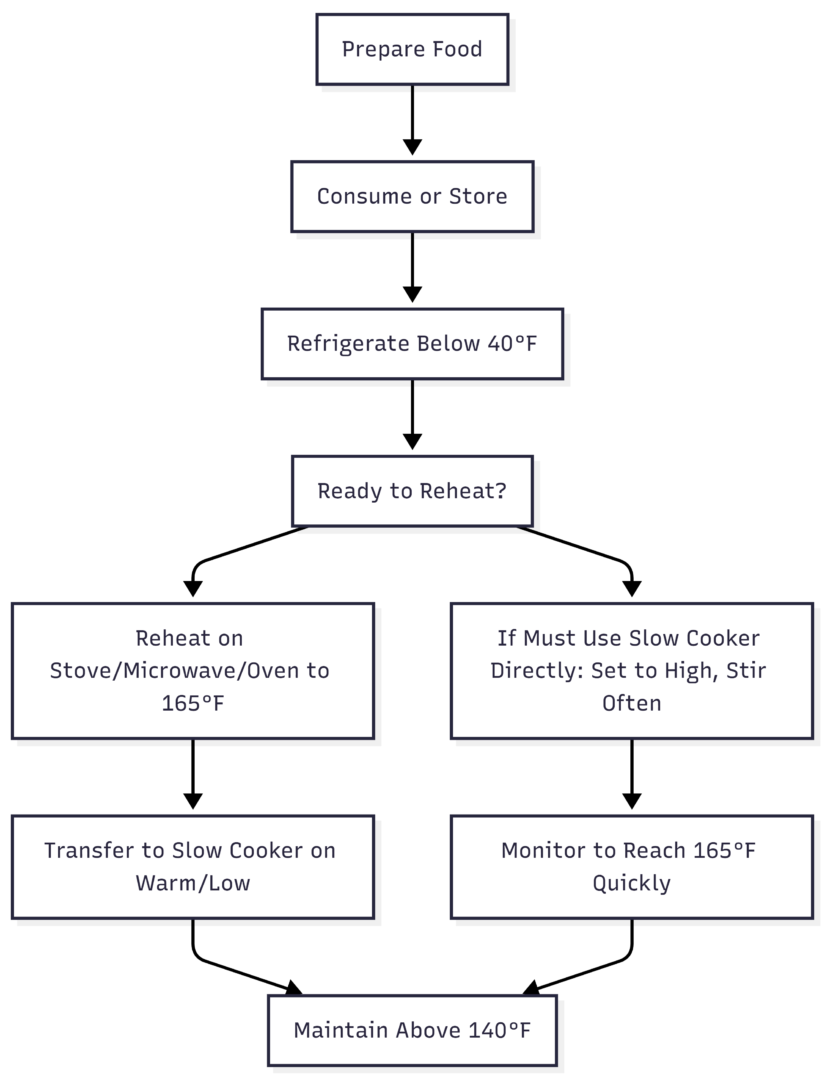
This flowchart illustrates the ideal process versus the riskier direct method, emphasizing safety steps.
Why You Shouldn’t Reheat Food Directly in a Slow Cooker
Food safety organizations like the USDA and SafeFood strongly advise against reheating cold leftovers directly in a slow cooker. The primary concern is the time it takes to exit the danger zone. On the “Low” setting, it could take several hours for food to reach 165°F (74°C), allowing bacteria to multiply exponentially.
For instance, if you place chilled soup or stew into the slow cooker, the outer layers might heat faster than the center, creating uneven temperatures and potential hot spots where bacteria survive. Stirring helps, but it’s not foolproof. Additionally, repeated reheating exacerbates risks—food should never be reheated more than once, as each cycle increases bacterial resistance and toxin production.
Another issue is the appliance itself. Placing a cold stoneware insert into a preheated base can cause thermal shock, leading to cracks. Manufacturers like Crock-Pot explicitly warn against this, noting that it voids warranties and poses safety hazards. Cracked inserts can harbor bacteria in crevices, making cleaning difficult.
User experiences from communities like Reddit’s r/slowcooking echo these warnings. Many users report cracked inserts after attempting direct reheating, with one sharing photos of hairline fractures that compromised the cooker’s integrity. Others describe meals that tasted off or caused mild stomach issues, attributing it to improper temperature control.
Beyond bacteria, there’s the quality factor. Slow reheating can dry out food, especially edges in a partially filled cooker. Experts recommend filling the slow cooker at least half full for even heating, but this isn’t always practical for small portions of leftovers.
If You Must Reheat Directly: Minimizing Risks
In scenarios where no other appliances are available—such as camping or limited kitchen setups—reheating in a slow cooker might be unavoidable. Here’s how to do it as safely as possible:
- Use the “High” setting to accelerate heating.
- Stir the food every 30 minutes to ensure even temperature distribution.
- Use a food thermometer to verify the internal temperature reaches 165°F (74°C) throughout.
- Avoid the “Low” setting entirely for reheating, as it prolongs danger zone exposure.
- Limit this to foods that were properly stored (refrigerated within 2 hours of cooking) and consume immediately after reheating.
Comparisons from user discussions suggest that four hours on “High” might suffice for denser foods like stews, but this varies by volume and starting temperature. Raw meat can be safely slow-cooked because it starts from a controlled state, but leftovers carry prior bacterial loads, making them riskier.
A table comparing reheating times and risks:
| Method | Time to 165°F | Risk Level | Notes |
|---|---|---|---|
| Slow Cooker (High) | 2-4 hours | High | Stir frequently; use thermometer. |
| Slow Cooker (Low) | 4-8 hours | Very High | Not recommended; extended danger zone. |
| Microwave | 2-5 minutes | Low | Quick and even if stirred. |
| Stovetop | 5-10 minutes | Low | Direct heat control. |
| Oven | 15-30 minutes | Low | Preheat to 325°F (163°C). |
This underscores why alternatives are superior.
Proper Ways to Save and Reheat Leftovers
The safest approach is to separate reheating from warming. Transfer leftovers from the slow cooker to airtight containers immediately after cooking, cooling them quickly in the fridge (divide large batches to speed cooling). Store in the refrigerator for up to 3-4 days or freeze for months.
For reheating:
- Stovetop: Bring to a boil, then simmer until 165°F (74°C).
- Microwave: Use a microwave-safe dish, cover, and heat in intervals, stirring to avoid cold spots.
- Oven: Preheat to 325°F (163°C), cover with foil, and heat until internal temperature is safe.
Once reheated, you can transfer back to the slow cooker on “Warm” or “Low” for serving, ensuring it’s at least half full to prevent drying.
Regarding stoneware: Some inserts are microwave-safe, but always check the manufacturer’s guidelines. Lids often aren’t, so transfer to another container to avoid melting or warping.
When to Use a Slow Cooker for Leftovers: Keeping Food Warm
Slow cookers shine at maintaining warmth for potlucks, parties, or buffets. After rapid reheating elsewhere, place food in the preheated cooker on “Warm.” This keeps it above 140°F (60°C) without overcooking. For small portions, consider mini slow cookers to maintain efficiency.
Users in online forums praise this for dishes like pulled pork or dips, noting enhanced flavors from resting. However, monitor time—don’t exceed 2 hours on “Warm” without checking temperatures.
Common Mistakes and User Experiences
From community discussions, several pitfalls emerge:
- Using liners incorrectly: Liners can melt on “High” if not rated properly, leading to leaks.
- Overfilling or underfilling: Too little food scorches; too much heats unevenly.
- Chicken breasts drying out: Users report shredding as a workaround.
- Transitioning from instant pots: Multi-cookers offer pressure cooking for faster results, preferred over traditional slow cookers for some.
New users often share excitement about their first slow cooker, dropping recipes like beef stew or vegetarian chili. Common queries include adjusting recipes for mini models or handling overly hot “Warm” settings with timers.
For instance, one user asked about controlling heat when the “Warm” is too aggressive, suggesting external timers or wraps. Another sought light, healthy meals for beginners, recommending simple vegetable soups.
Recommended Slow Cookers: Specifications and Prices
To enhance your slow cooking experience, consider these top models based on current reviews. Prices are approximate and may vary by retailer.
| Model | Capacity | Features | Price (USD) | Notes |
|---|---|---|---|---|
| Crock-Pot 7-Quart Oval | 7 quarts | Programmable timer, locking lid, dishwasher-safe | $50-60 | Ideal for families; even heating. |
| Hamilton Beach Set & Forget | 6 quarts | Temperature probe, clip-tight lid, three settings | $60-70 | Probe ensures safe temps; great for reheating monitoring. |
| Instant Pot Duo | 6 quarts | Multi-function (slow cook, pressure, sauté), app control | $100-120 | Versatile; better for quick reheats via sauté. |
| All-Clad Gourmet | 7 quarts | Stainless steel insert, precise controls, 20-hour timer | $200-250 | Premium; microwave-safe insert. |
| Cuisinart 3-in-1 | 6.5 quarts | Slow cook, steam, brown/sauté functions | $150-170 | Hybrid; avoids direct slow reheating issues. |
These recommendations stem from user favorites in forums, emphasizing durability and safety features like auto-shutoff.
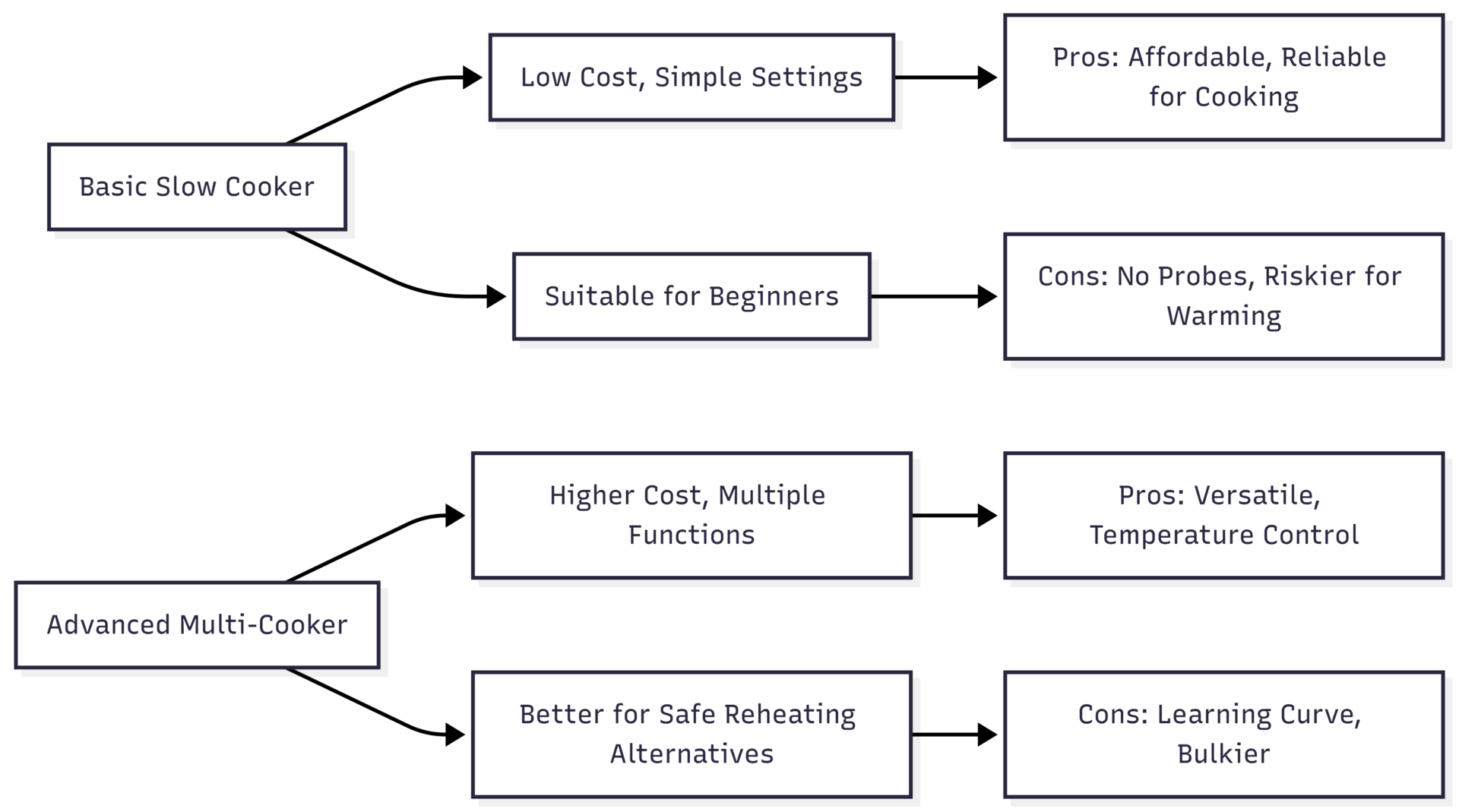
For a decision-making aid, here’s a chart comparing basic vs. advanced models:
Recipes and Tips for Slow Cooker Success
While focusing on reheating, let’s touch on why slow cookers are beloved: recipes. For leftovers that reheat well elsewhere, try:
- Beef Stew: Chuck roast, carrots, potatoes on “Low” for 8 hours.
- Vegetarian Chili: Beans, tomatoes, spices on “High” for 4 hours.
Tips: Always thaw frozen leftovers in the fridge before reheating. Use thermometers religiously.
Conclusion: Prioritize Safety Over Convenience
In summary, reheating food in a slow cooker is possible but not advisable due to bacterial risks and potential damage to the appliance. Opt for quick methods to reach 165°F (74°C), then use the slow cooker for warming. By following these guidelines, you can enjoy your meals safely and extend your slow cooker’s life. Whether you’re a newbie or seasoned user, remember: safety first in the kitchen.
Please share this Can You Reheat Food In A Slow Cooker? with your friends and do a comment below about your feedback.
We will meet you on next article.
Until you can read, Slow Cooker Dump Bags {Freeze and Go Meals}