Slow Cooker Mistakes That Are Ruining Your Meals
Slow cookers are beloved for their simplicity and ability to transform tough ingredients into tender, flavorful dishes with minimal effort. Whether you’re preparing hearty stews, roasts, or soups, this appliance excels at low-and-slow cooking that builds depth of flavor over hours.
However, even experienced cooks fall into traps that lead to watery, bland, overcooked, or unsafe results. These errors often stem from misunderstanding how slow cookers work: they rely on sealed, even heat distribution without evaporation, which differs from stovetop or oven methods.
In this comprehensive guide, we’ll explore the most common slow cooker mistakes, drawing from expert insights like those from cookbook authors, recipe developers, and testing labs. By avoiding these pitfalls, you can achieve consistent, delicious outcomes every time. We’ll cover everything from equipment choices to ingredient handling, timing, and safety. Plus, we’ll include practical fixes, examples, and tools like tables for quick reference. If you’re shopping for a new slow cooker, we’ll recommend top models with specifications and current pricing to suit various needs.
Understanding these issues starts with the basics: slow cookers heat from the bottom and sides, maintaining a simmer around 190-210°F on low or 200-300°F on high, depending on the model. This gentle process breaks down connective tissues in meats and infuses flavors, but it demands patience and precision. Let’s dive into the mistakes that could be sabotaging your meals and how to correct them for optimal results.
1. Choosing the Wrong Size Slow Cooker
One of the foundational errors is selecting a slow cooker that’s mismatched to your recipe or household size. Using an oversized model for small batches spreads ingredients too thinly, exposing more surface area to heat. This leads to faster cooking, uneven doneness, and potential overcooking, as the shallower layer heats up quicker than intended. For instance, a 2-quart batch in an 8-quart cooker might finish in 4 hours instead of 8, defeating the “set-it-and-forget-it” appeal. Conversely, an undersized cooker risks overflow or incomplete cooking.
Experts emphasize that the cooker should be filled between half and three-quarters full for even heat distribution. Underfilling causes scorching or drying out, while overfilling prevents proper circulation, leading to raw spots or spills. For most families of 4-6, a 4-6 quart model strikes the balance, allowing versatile batch sizes without waste.
To fix this, assess your typical needs: singles or couples might opt for 2-3 quarts, while larger households benefit from 6-8 quarts. Always match the recipe’s recommended size. If you’re frequently cooking small portions, consider a mini cooker for dips or sides.
Here’s a quick reference table for recommended sizes:
| Household Size | Recommended Capacity | Example Uses | Approximate Price Range |
|---|---|---|---|
| 1-2 People | 1.5-3 Quarts | Soups, dips, small roasts | $20-50 |
| 3-4 People | 4-6 Quarts | Stews, casseroles, family meals | $50-150 |
| 5+ People | 6-8 Quarts | Batch cooking, large roasts | $100-200 |
By sizing correctly, you’ll ensure efficient cooking and avoid the frustration of inconsistent results.
2. Overfilling or Underfilling the Cooker
Closely related to size selection is the habit of improper filling, which disrupts heat flow and moisture balance. Overfilling beyond three-quarters capacity crowds ingredients, blocking steam circulation and leading to uneven cooking—meats might remain tough while veggies turn mushy. It also increases spill risk, creating messes and straining the appliance’s motor over time.
Underfilling, below half capacity, causes the opposite: excessive evaporation despite the sealed lid, resulting in dry, scorched bottoms. Liquids concentrate too much, intensifying flavors undesirably or burning sugars in sauces.
The ideal liquid level should just cover ingredients, accounting for natural juices released during cooking. Slow cookers retain moisture well, so recipes often need half the liquid of stovetop versions. For example, a beef stew that requires 4 cups of broth on the stove might only need 2 in a slow cooker.
Fix it by measuring ingredients precisely and adjusting for the cooker’s volume. If overfilled, transfer to a larger pot or cook in batches. For underfilled recipes, add root vegetables or broth to bulk up. This mistake is easily avoided with practice, leading to perfectly balanced meals.
3. Using the Wrong Cuts of Meat
Opting for premium, lean cuts like filet mignon or pork tenderloin is a costly error in slow cooking. These lack the fat and connective tissue that break down over long, low heat, resulting in dry, rubbery textures. High-end meats are better suited for quick, high-heat methods like grilling.
Instead, choose tougher, budget-friendly cuts such as chuck roast, pork shoulder, or brisket. These contain collagen that melts into gelatin during extended cooking, yielding tender, juicy results. For poultry, bone-in thighs or legs outperform breasts, which can dry out.
Wrong cuts not only waste money but also diminish flavor—lean meats don’t self-baste like fattier ones. A chuck roast, for instance, becomes fork-tender after 8 hours on low, absorbing spices deeply.
To correct this, shop for “braising” or “stewing” labels. Trim excess fat to avoid greasiness, but leave some for moisture. Experiment with recipes like pulled pork from shoulder cuts for foolproof success. This shift saves money while enhancing meal quality.
4. Not Searing or Preparing Meat Properly
Skipping the sear step before adding meat to the slow cooker robs your dish of rich flavor and texture. Searing caramelizes the surface via the Maillard reaction, creating a browned crust that locks in juices and adds depth. Without it, meats can taste bland and steamed rather than roasted.
Preparation extends to trimming fat and patting dry—excess fat leads to oily pools, while moisture prevents browning. Many modern slow cookers have sauté functions, but a stovetop pan works fine.
For example, browning a beef roast for 2-3 minutes per side before slow cooking elevates a simple pot roast to restaurant quality. Deglaze the pan with broth to capture those flavorful bits.
Fix this by incorporating searing as routine. If time’s short, at least season and dry the meat. This small effort significantly improves taste and appearance, making your meals more appealing.
5. Cooking Skin-On Chicken Incorrectly
Adding chicken with skin on often results in flabby, unappetizing texture because the moist environment prevents crisping. Unlike oven baking, slow cookers steam rather than roast, softening skin into a rubbery layer.
For direct serving, use skinless pieces to avoid this. Bone-in skinless thighs hold up best, staying moist without excess fat.
If crisp skin is desired, transfer cooked chicken to a broiler for 3-5 minutes post-slow cooking. This adds a step but yields golden results.
Avoid this mistake by planning ahead—remove skin beforehand or choose recipes where it dissolves, like soups. Proper handling ensures tender meat without off-putting textures.
6. Adding Dairy Products Too Soon
Introducing milk, cream, cheese, or yogurt early causes curdling due to prolonged low heat and acidity from ingredients like tomatoes. The proteins separate, creating grainy, unappealing sauces.
Dairy thrives in short, gentle heating. Add it in the last 15-30 minutes on low, stirring to incorporate smoothly.
For creamy dishes like chowders, cook the base fully, then stir in dairy off-heat or on warm. Sour cream or cream cheese melts best when tempered with a bit of hot liquid first.
This timing preserves creaminess, preventing waste and ensuring velvety textures in favorites like stroganoff.
7. Mishandling Herbs, Spices, and Seasoning
Seasoning errors range from adding fresh herbs too early—they wilt and lose vibrancy—to overdoing potent spices like chili peppers, which intensify over time due to capsaicin release.
Dried herbs suit long cooks, releasing flavors gradually. Fresh ones, like basil or cilantro, should go in at the end for brightness.
Common pitfalls include under-seasoning (flavors mute in the sealed environment) or excess alcohol, which doesn’t evaporate, leaving a harsh taste.
Fix by tasting midway (without excessive lid lifts) and adjusting. Use half the spices initially, adding more later. For heat, incorporate peppers late. Proper seasoning turns bland meals into bold ones.
8. Using Too Much Liquid or Alcohol
Excess liquid dilutes flavors since little evaporates in a sealed cooker, leading to soupy results. Stovetop recipes need adaptation—halve broth or skip it if meats release juices.
Alcohol, like wine, concentrates rather than burns off, overpowering dishes. Use sparingly or deglaze with it during searing.
Vegetables and meats contribute moisture, so start minimal and add if needed. For thicker sauces, reduce on high uncovered for 1-2 hours at the end.
This balance concentrates tastes, avoiding watery disappointments.
9. Cooking Frozen Food Directly
Placing frozen items in prolongs time in the 40-140°F danger zone, fostering bacterial growth like Salmonella.
Always thaw fully in the fridge. For safety, sear thawed meats too.
Exceptions are rare, but err on caution—thawing ensures even, safe cooking.
10. Not Layering Ingredients Correctly
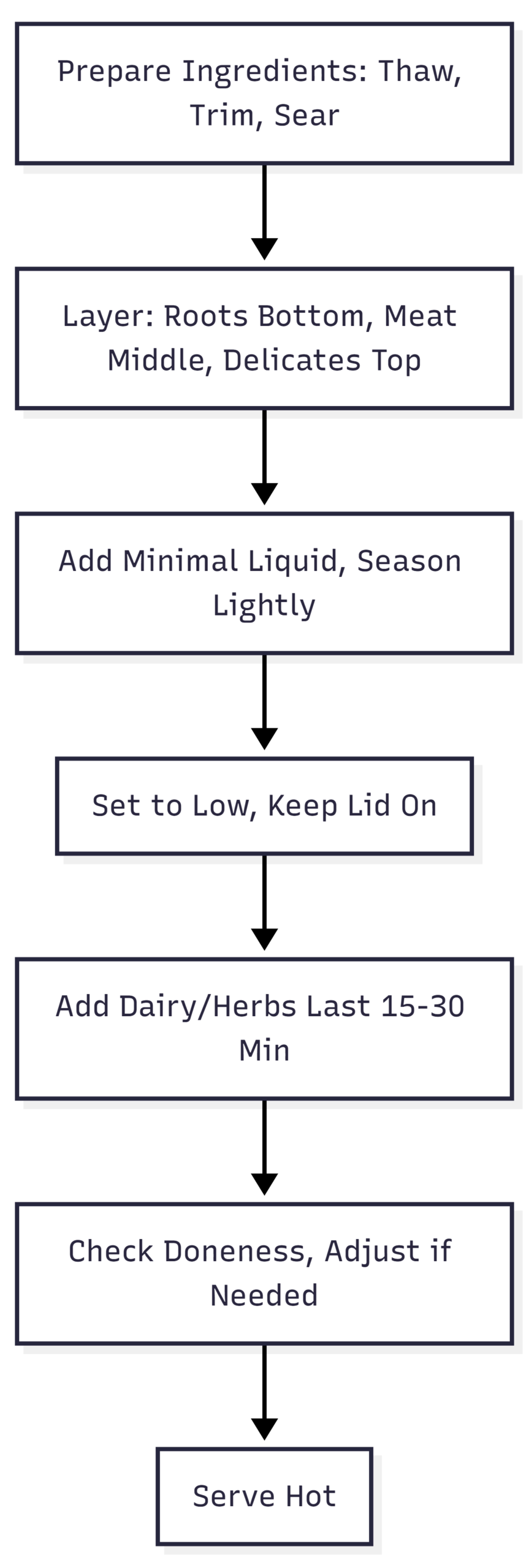
Improper layering ignores bottom heat: tough roots like potatoes go first, absorbing flavors, while delicate items like peas top to avoid mush.
Meats in the middle for even cooking. This ensures everything finishes simultaneously.
Visualize: veggies bottom, protein middle, liquids over all.
Correct layering prevents over/undercooked elements.
Here’s a flowchart for proper preparation:
11. Lifting the Lid Too Often
Each peek releases heat, adding 20-30 minutes to cook time and disrupting moisture balance, causing dryness or unevenness.
Resist checking—use glass lids for viewing. Trust the process; aromas indicate progress.
This habit preserves efficiency and consistency.
12. Setting the Heat Too High
High settings boil rather than simmer, toughening meats and breaking down veggies prematurely. Low (7-8 hours) tenderizes better than high (3-4 hours).
Use high for quick starts, then switch to low. Auto modes optimize this.
Prioritizing low enhances flavor and texture.
13. Overcooking or Undercooking Foods
Overcooking delicate items like shrimp turns them rubbery—add late. Undercooking tough cuts leaves them chewy; extend time as needed.
Match ingredients: sturdy for all-day, fragile for end.
Monitor with probes; over-temp can still tenderize roasts.
Balanced timing yields perfect tenderness.
14. Using for Reheating or Unsafe Practices
Slow cookers heat too gradually for safe reheating, lingering in danger zones. Use microwaves or stoves instead, then warm in cooker.
Avoid kidney beans without boiling first—their toxin phytohaemagglutinin survives low temps.
Reheat to 165°F quickly for safety.
15. Neglecting Greasing, Lining, or Cleaning
Not greasing leads to stuck-on residue, complicating cleanup. Spray or line with foil/parchment.
For condensation-sensitive dishes, line lids with paper towels to absorb drips, keeping toppings crisp.
Clean deeply: vinegar-water soak on low removes buildup. Avoid abrasives.
Proper maintenance extends lifespan and hygiene.
16. Specific Ingredient Mistakes: Pasta, Veggies, Kidney Beans
Add pasta last 20 minutes to avoid mush. Brown veggies first for flavor and moisture control.
Kidney beans need 10-minute boil pre-cook to neutralize toxins—slow cookers don’t suffice.
Tailor handling for each: sauté aromatics, add greens late.
17. Not Browning Vegetables
Raw veggies yield bland results; browning adds caramelization and removes excess water.
Sauté onions, garlic, carrots first—deglaze for extra flavor.
This step elevates overall taste without much effort.
In conclusion, mastering slow cookers means sidestepping these errors through mindful preparation and technique. With practice, you’ll enjoy effortless, flavorful meals that make the most of this versatile appliance. Experiment confidently, and your dinners will never be the same.
Please share this Slow Cooker Mistakes That Are Ruining Your Meals with your friends and do a comment below about your feedback.
We will meet you on next article.
Until you can read, Why Does Slow Cooking Taste Better?