Why Does Slow Cooking Taste Better?
Slow cooking has captivated home cooks and chefs alike for its ability to transform simple ingredients into profoundly flavorful dishes. At its core, this method involves applying low heat over an extended period, typically between 140°F and 200°F, allowing chemical reactions to unfold gradually.
Unlike high-heat techniques that can dry out food or create uneven results, slow cooking excels in breaking down tough tissues, concentrating flavors, and retaining moisture. This results in meals that are not only tastier but also more nutritious and easier to prepare with minimal active involvement.
In this comprehensive guide, we’ll explore the science behind why slow cooking tastes better, the key mechanisms at play, the best foods to use, practical tips, and how it stacks up against faster methods.
The Science of Low-Temperature Cooking
Low-temperature cooking is the foundation of slow cooking’s success. By maintaining temperatures well below boiling point – often around 160°F to 180°F for most recipes – the process avoids the rapid evaporation and protein denaturation that occur in high-heat methods like frying or grilling. Instead, heat penetrates food evenly, minimizing temperature gradients that lead to overcooked exteriors and underdone interiors.
One primary reason slow cooking enhances taste is through controlled heat transfer. Food, rich in water, has a high heat capacity, meaning it absorbs energy slowly. High external temperatures create steep gradients, burning the outside before the inside reaches ideal doneness. Slow cooking equalizes this, allowing the entire piece of food to reach the desired internal temperature uniformly. For instance, in a thick cut of meat, this prevents dry, gray bands and preserves a juicy, even texture.
To illustrate the process, consider the following flowchart of temperature effects on meat during slow cooking:
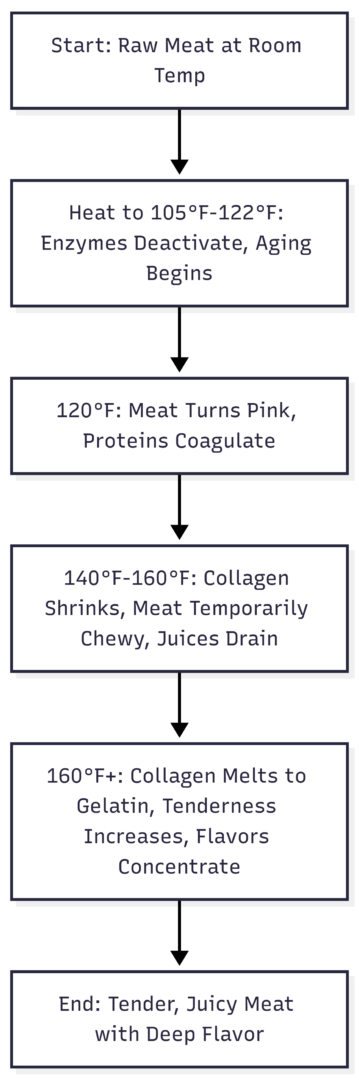
This progression highlights how patience allows meat to pass through challenging phases into optimal tenderness.
Collagen Breakdown: From Tough to Tender
Collagen, a connective tissue abundant in tougher cuts of meat, is a key player in why slow cooking produces superior results. In raw form, collagen forms rigid structures that make meats like brisket or pork shoulder chewy and unyielding. However, at temperatures around 160°F, sustained over hours, collagen hydrolyzes into gelatin – a soft, silky substance that imparts a rich mouthfeel.
This breakdown doesn’t happen quickly; it requires time for water molecules to penetrate and dissolve the collagen fibers. In high-heat cooking, collagen contracts rapidly, squeezing out moisture and toughening the meat. Slow cooking, by contrast, gently unwinds these fibers, reabsorbing juices and creating a melt-in-your-mouth texture. For example, a chuck roast cooked slowly for 6-8 hours emerges fall-apart tender, with gelatin enriching the surrounding broth or sauce.
The result? Enhanced flavor without added ingredients. Gelatin acts as a natural thickener, binding flavors and creating a velvety consistency that elevates simple stews or braises. This is particularly beneficial for budget-friendly cuts, turning economical options into gourmet experiences.
Flavor Concentration and the Maillard Reaction
Flavor development in slow cooking stems from concentration and chemical reactions that unfold over time. As liquids simmer gently, water evaporates slowly, intensifying the inherent tastes of ingredients. Herbs, spices, vegetables, and meats release their compounds gradually, allowing them to meld deeply rather than volatilize away.
A critical reaction here is the Maillard reaction, where amino acids from proteins react with reducing sugars at temperatures between 140°F and 165°F. This non-enzymatic browning produces hundreds of new flavor compounds, responsible for the savory, umami-rich notes in slow-cooked dishes. While often associated with high-heat searing, the Maillard reaction occurs more subtly in slow cooking, especially if ingredients are browned initially or if the dish includes sugars from onions or carrots.
In a sealed environment like a slow cooker or Dutch oven, these flavors don’t escape. Instead, they recirculate, infusing every component. For instance, a beef stew started with a quick sear develops complex, caramelized notes over 4-6 hours, far surpassing a rushed version.
To quantify flavor enhancement, consider this table comparing key reactions in slow vs. fast cooking:
| Aspect | Slow Cooking (Low Heat, Long Time) | Fast Cooking (High Heat, Short Time) |
|---|---|---|
| Maillard Reaction | Gradual, deep compound formation | Intense but surface-level only |
| Flavor Concentration | High, via evaporation and infusion | Low, flavors dilute or evaporate |
| Aromatic Compound Retention | Excellent, sealed environment | Poor, many volatilize |
| Overall Taste Depth | Complex, layered | Simple, often one-note |
This table underscores how slow cooking builds multifaceted flavors that fast methods can’t replicate.
Moisture Retention: Keeping Juices Locked In
One of the most noticeable benefits of slow cooking is its superior moisture retention. High-heat methods drive water out of food cells, leading to dryness. In contrast, low temperatures allow moisture to redistribute evenly, with minimal loss.
In meats, proteins coagulate slowly, preventing the expulsion of juices. Vegetables retain their structure while softening, absorbing surrounding liquids. Sealed cooking vessels trap steam, creating a humid environment where evaporated moisture condenses and returns to the dish. This self-basting effect ensures foods like chicken thighs or root vegetables remain succulent.
Quantitatively, slow-cooked meats can retain up to 30% more moisture than grilled equivalents, based on food science studies. This not only improves taste – juicy food carries flavors better – but also enhances perceived tenderness.
Nutrient Retention and Health Benefits
Beyond taste, slow cooking preserves nutrients effectively. High-heat cooking degrades heat-sensitive vitamins like C and B-complex, or leaches minerals into discarded water. Slow methods minimize this: lower temperatures protect nutrients, and cooking in minimal liquid retains them in the dish.
For example, lycopene in tomatoes becomes more bioavailable as cell walls break down slowly. Antioxidants in vegetables like carrots and onions concentrate rather than degrade. Proteins in meats denature gently, maintaining digestibility without forming harmful compounds like advanced glycation end-products (AGEs) that high heat can produce.
Slow cooking also supports gut health by tenderizing fibers in legumes and tough vegetables, making them easier to digest. For those with digestive sensitivities, this method reduces bloating from undercooked beans or fibrous roots.
Best Foods for Slow Cooking
Slow cooking shines with ingredients that benefit from prolonged heat. Tougher meats with high collagen content are ideal, as are dense vegetables and legumes. Here’s a curated list of top choices, including specifications and approximate prices (based on average U.S. market rates; prices vary by region and quality):
| Food Item | Best Cuts/Types | Why It Excels in Slow Cooking | Specifications | Approx. Price per lb (USD) |
|---|---|---|---|---|
| Beef | Chuck roast, brisket, short ribs | Collagen breaks down for tenderness | 3-5 lbs, well-marbled | $5-8 |
| Pork | Shoulder (butt), ribs | Fat renders slowly, infusing flavor | 4-6 lbs, bone-in for richness | $3-6 |
| Lamb | Shank, shoulder | Gamey flavors mellow, meat falls off bone | 2-4 lbs, trimmed | $7-10 |
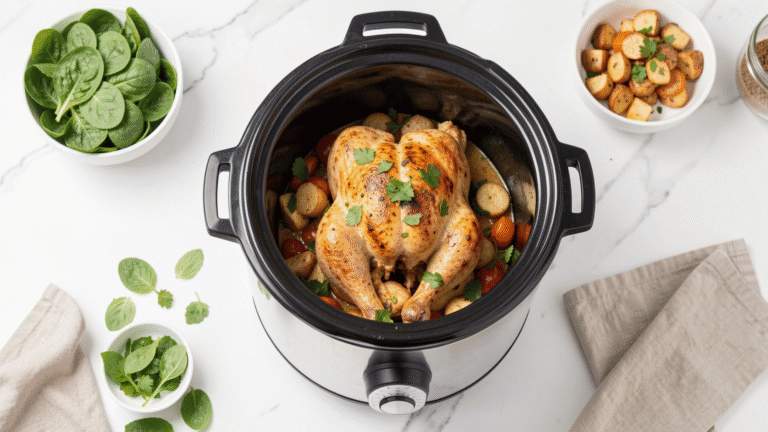
| Chicken | Thighs, whole bird | Skin locks moisture, dark meat stays juicy | 3-5 lbs, skin-on | $2-4 |
| Root Vegetables | Potatoes, carrots, turnips | Soften to creamy texture, absorb flavors | Firm, unblemished, 1-2 inches diameter | $1-2 |
| Legumes | Lentils, chickpeas, beans | Cook evenly without splitting, digestible | Dried, soaked overnight | $1-3 (per dry lb) |
| Onions/Garlic | Yellow onions, whole cloves | Caramelize naturally for sweetness | Medium size, peeled | $0.50-1 |
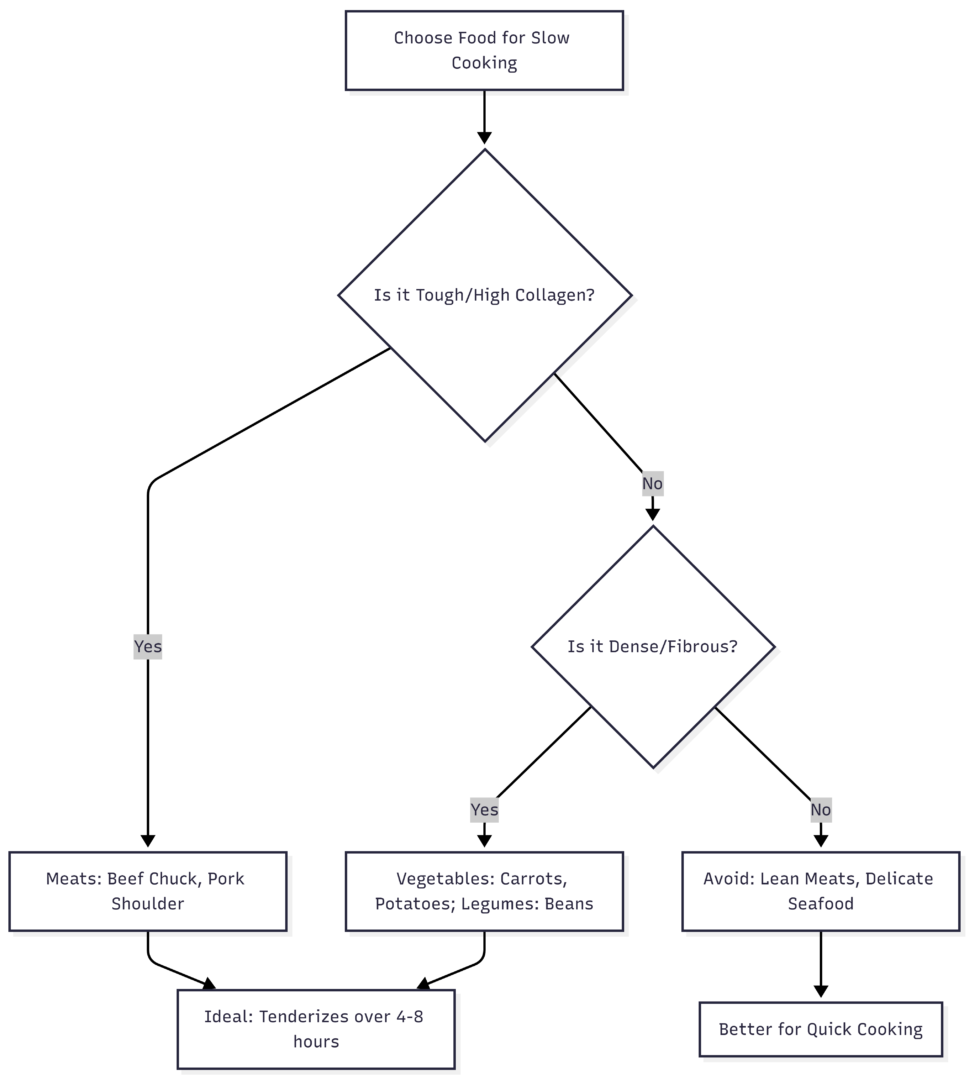
These selections emphasize affordability – tougher cuts are often cheaper yet yield premium results. Avoid lean meats like filet mignon, which dry out without collagen to hydrate them.
For visual aid, here’s a decision tree for selecting foods:
Practical Tips for Mastering Slow Cooking
To harness slow cooking’s benefits, focus on technique. Use a slow cooker (electric appliance, 4-6 quart capacity, priced $30-80) or oven-safe Dutch oven (cast iron, 5-7 quarts, $50-200). Preheat if browning, then set to low.
Key tips:
- Prep Ingredients: Cut uniformly for even cooking. Brown meats briefly for Maillard boost.
- Layer Wisely: Place denser items like roots at the bottom, quicker-cooking greens near the end.
- Liquid Control: Use minimal broth or wine – food releases its own juices.
- Seasoning: Add herbs/spices early (e.g., ginger, cumin for warmth), salt later to avoid toughness.
- Timing: 4-8 hours on low; check doneness with a fork.
For poultry, keep skin on; for beans, soak first. Integrate into routines: prep mornings for evening meals.
When Fast Cooking Wins
While slow cooking excels for depth, fast methods suit certain foods. Seared scallops or tempura retain delicacy in minutes; overcooking ruins them. Lean cuts like tuna stay moist when quick-cooked but dry slowly. High heat preserves crisp textures in stir-fries, unavailable in slow methods.
FAQ: Addressing Common Questions
It involves low heat (140°F-200°F) for 2-12 hours, using appliances like slow cookers or low ovens for even, gradual transformation.
No – a basic pot works, but slow cookers ($30+) or Dutch ovens ($50+) enhance results with even heat distribution.
Use low settings, stir occasionally, and ensure sufficient liquid. Heavy pots help regulate temperature.
No – it tenderizes vegetables and legumes too, making them creamy and flavorful.
Prep ahead; set and forget while working or relaxing. Leftovers improve overnight.
In summary, slow cooking tastes better due to its harmonious blend of science and simplicity: collagen melts, flavors concentrate, moisture stays, and nutrients endure. By embracing this method, you unlock tender, flavorful meals that reward patience with unparalleled depth. Whether for a hearty stew or vegetable medley, it’s a culinary approach that delivers on taste, health, and ease – proving that sometimes, slower truly is better.
Please share this Why Does Slow Cooking Taste Better? with your friends and do a comment below about your feedback.
We will meet you on next article.
Until you can read, How to Use a Slow Cooker Successfully