How to Use a Slow Cooker Successfully?
Slow cookers offer a hands-off approach to preparing hearty, nutritious meals that retain flavors and tenderness through low, steady heat. This comprehensive guide covers everything from basics to advanced techniques, helping beginners and experienced users alike maximize their appliance’s potential. Whether you’re cooking for one or a crowd, understanding the fundamentals ensures consistent results.
What Is a Slow Cooker?
A slow cooker, often called a Crock-Pot after the popular brand, is an electric countertop appliance designed for long, low-temperature cooking. It consists of a lidded pot, typically made of ceramic or metal, inserted into a heating base. The device simmers food at temperatures between 170°F and 280°F, breaking down tough ingredients like meats and vegetables into tender, flavorful dishes.
Unlike ovens or stovetops, slow cookers trap moisture and heat, minimizing evaporation and requiring less liquid. This makes them ideal for soups, stews, roasts, and even desserts. Modern models vary in shape (round or oval), capacity (from 1.5 quarts to 8 quarts), and features like programmable timers or sear functions.
Key components include:
- Heating Element: Wraps around the base for even heat distribution.
- Inner Pot: Removable for easy cleaning; ceramic versions retain heat well, while metal ones allow stovetop searing.
- Lid: Seals in steam, creating a moist environment.
- Controls: Basic dials or digital interfaces for settings.
Slow cookers promote energy efficiency, using about as much power as a lightbulb (75-150 watts on low). They’re versatile for busy lifestyles, allowing you to prep ingredients in the morning and return to a ready meal.
How Does a Slow Cooker Work?
The slow cooker operates on the principle of moist, indirect heat. Electricity powers the heating element in the base, which warms the outer housing. This heat transfers to the inner pot, cooking food evenly from all sides. The sealed lid prevents heat and moisture escape, creating a self-basting environment where flavors meld over hours.
Cooking occurs in two phases: initial heating to reach safe temperatures (above 140°F to kill bacteria), followed by sustained simmering. Liquids from ingredients release during cooking, forming a natural sauce. No stirring is needed, as convection circulates heat.
For optimal performance:
- Fill the pot ½ to ¾ full to allow heat circulation.
- Avoid overcrowding, which can lead to uneven cooking.
- Use cuts of meat with connective tissue, as slow heat converts collagen to gelatin for tenderness.
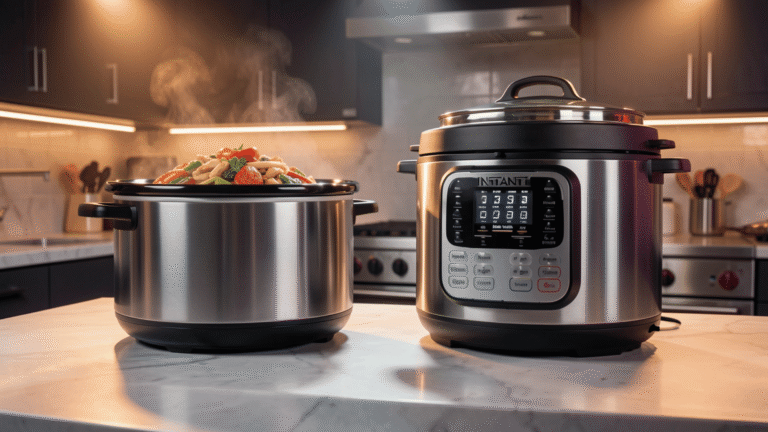
This method excels for nutrient retention, as vitamins in vegetables and proteins aren’t lost to high-heat boiling. It’s distinct from pressure cookers, which use high pressure for faster results, or Instant Pots, which combine functions.
Low vs. High Setting Explained
Slow cookers typically offer low, high, and warm settings, with some including medium or auto modes.
- Low Setting: Operates at 190-200°F, ideal for all-day cooking (6-10 hours). It gently breaks down fibers in meats and infuses flavors without overcooking. Use for tough cuts like chuck roast or root vegetables.
- High Setting: Reaches 300°F, cooking in half the time (3-5 hours). It’s suitable for quicker meals or when starting later in the day. However, it can make delicate ingredients like chicken breasts dry if overused.
- Warm Setting: Maintains 165°F to keep food safe without further cooking. Limit to 2-4 hours to avoid bacterial growth.
- Auto Setting: Starts on high for 1-2 hours, then switches to low for even results.
Choose low for deeper flavor development; high for convenience. Test your model, as temperatures vary—older units may run cooler.
Here’s a comparison table for clarity:
| Setting | Temperature Range | Typical Cook Time | Best For |
|---|---|---|---|
| Low | 190-200°F | 6-10 hours | Tough meats, stews, beans |
| High | 280-300°F | 3-5 hours | Softer veggies, poultry, quicker prep |
| Warm | 165°F | Up to 4 hours | Holding finished dishes |
Choosing the Right Size Slow Cooker
Size impacts efficiency and portion yield. Slow cookers work best when ⅔ to ¾ full—underfilling leads to scorching; overfilling prevents even heating.
- 1.5-3 Quart: Suits 1-2 people; perfect for dips, small sides, or single servings. Example: Compact models like the Elite Gourmet MST-250XS (1.5 quarts, stainless steel, approx. $20-25).
- 4-5 Quart: Feeds 3-4; versatile for families with leftovers. Example: Crock-Pot 4-Quart Manual (approx. $30-35, manual controls).
- 6-7 Quart: Ideal for 5+ or batch cooking. Oval shapes fit roasts better. Example: Hamilton Beach 6-Quart Programmable (approx. $50-60, digital timer, locking lid).
- 8+ Quart: For large crowds or freezing extras. Example: Crock-Pot 8-Quart Express (approx. $70-80, multi-function with pressure cooking).
Consider oval for whole chickens or roasts; round for soups or cakes. Prices based on current market averages; check retailers for deals.
Table of recommended models with specs and prices:
| Size | Model Example | Key Specs | Approx. Price |
|---|---|---|---|
| 3 Quart | Elite Gourmet MST-350B | Dishwasher-safe pot, low/high/warm settings | $25 |
| 5 Quart | Crock-Pot SCR503-SP | Stoneware pot, programmable timer | $40 |
| 6 Quart | Hamilton Beach 33461 | Portable with clip-tight lid, 7-quart capacity option | $55 |
| 8 Quart | Instant Pot Duo | Multi-cooker with slow cook function, stainless steel | $90 |
Essential Tips for Using a Slow Cooker
Maximize results with these practices:
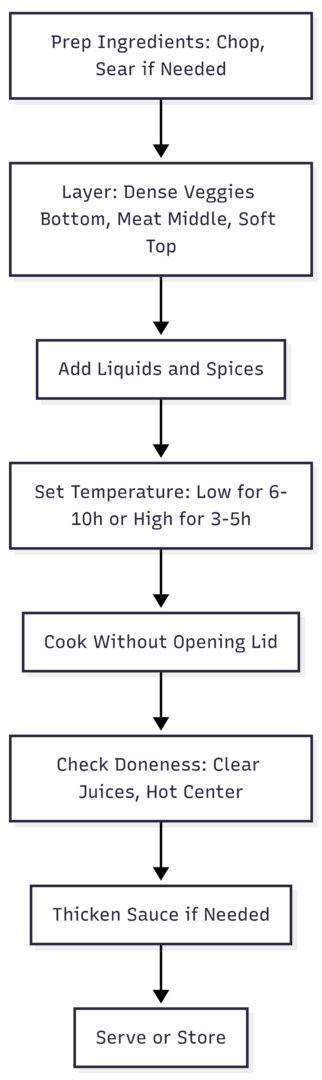
- Prep Ingredients: Chop uniformly for even cooking. Sear meats first in a pan for richer flavor and better texture—brown onions or beef to caramelize sugars.
- Layering: Place dense items (potatoes, carrots) at the bottom, meats in the middle, and soft veggies (zucchini, peppers) on top. Pour liquids last.
- Liquid Management: Use half the liquid of stovetop recipes; ingredients release moisture. Aim for ½-1 cup broth for most dishes.
- Avoid Peeking: Lifting the lid releases heat, adding 20-30 minutes to cook time. Only open if adding ingredients late.
- Spice Adjustment: Herbs intensify over time; add fresh ones at the end. Start with less chili or garlic.
- Dairy Addition: Stir in milk, cheese, or cream in the last 30 minutes to prevent curdling.
- Thickening: If sauce is thin, mix 1-2 tbsp cornstarch with water and stir in on high for 30 minutes. Alternatives: flour slurry, gravy granules, or add lentils early.
- Fresh Ingredients: Opt for quality produce and meats for better nutrition and taste.
- Model Familiarity: Read the manual; note cook times, as models differ by 1-2 hours.
For visual aid, here’s a flowchart for the slow cooking process:
Converting Stovetop Recipes to Slow Cooker
Adapt favorites with these guidelines. Slow cookers need less liquid and longer times.
Conversion table:
| Stovetop Time | Slow Cooker High | Slow Cooker Low |
|---|---|---|
| 15-30 min | 1-2 hours | 4-6 hours |
| 30-60 min | 2-3 hours | 5-7 hours |
| 1-2 hours | 3-4 hours | 6-8 hours |
| 2-3 hours | 4-6 hours | 8-12 hours |
Reduce liquids by 50%; add thickeners if needed. Test with simple recipes like chili.
Pantry Staples for Slow Cooking
Stock these for quick meals:
- Proteins: Quinoa, beans, lentils, chickpeas.
- Bases: Canned diced tomatoes (no sugar), low-sodium broths (chicken, beef, vegetable).
- Thickeners: Arrowroot starch, cornflour.
- Flavor: Spices (cumin, paprika, garlic powder), onions, garlic.
Table of essentials:
| Item | Use | Shelf Life |
|---|---|---|
| Quinoa | Protein base | 2 years |
| Beans/Lentils | Fiber, thickening | 1-2 years canned |
| Diced Tomatoes | Sauces | 1 year |
| Broths | Liquids | 1 year |
| Arrowroot | Thickening | Indefinite |
Using Slow Cooker for Freezer Meals
Prep ahead: Assemble raw ingredients in freezer bags (e.g., meat, veggies, spices), freeze up to 3 months. Thaw overnight, dump into cooker. Examples: Meatloaf (ground beef, oats, eggs), Minestrone (veggies, beans, pasta).
Benefits: Saves time, reduces waste. Avoid freezing dairy or potatoes, as textures change.
Slow Cooker for Meal Prep
Batch cook proteins like shredded chicken: Cook 4-6 breasts with broth on low for 6 hours, shred for burrito bowls or soups. Store in fridge (5 days) or freezer (6 months).
Chicken advantages: High protein (25g per 3oz), vitamins B6/B12 for energy. Recipes: Chicken Enchilada Soup, Chicken Noodle Soup, Chicken Tortilla Soup.
Safety Basics
- Temperature: Ensure food reaches 140°F quickly; don’t start with frozen meat.
- Filling: Avoid over/underfilling.
- Cleaning: Wash pot after use; don’t submerge base.
- Power: Use grounded outlets; don’t leave unattended long-term.
- Bacteria: Reheat to 165°F; discard after 2 hours at room temp.
- Lid: Keep on to maintain heat.
Common Beginner Mistakes
- Overfilling: Causes spills, uneven cooking.
- Too Much Liquid: Leads to watery dishes.
- Not Searing: Misses flavor depth.
- Frequent Lid Lifts: Extends time.
- Wrong Cuts: Lean meats dry out; use fatty ones.
- Over-Spicing: Flavors amplify.
- Ignoring Manual: Misses model specifics.
- Frozen Ingredients: Risks unsafe temps.
Recommended Recipes
Try these for starters:
- Shredded Beef Tacos: Brown beef, add to cooker with onions, tomatoes, spices; low 8 hours. Serve in tortillas.
- Chicken Tortilla Soup: Chicken, corn, beans, tomatoes; high 4 hours. Top with avocado.
- Split Pea Soup: Ham, peas, carrots; low 8 hours.
- Pulled Pork Sandwiches: Pork shoulder, BBQ sauce; low 10 hours.
- Turkey Curry: Turkey, curry paste, veggies; high 5 hours.
- Lasagne: Layer noodles, sauce, cheese; high 4 hours.
- Cottage Pie: Ground beef, veggies, mashed potato top; low 6 hours.
For more, explore linked posts: Crockpot French Dip Beef Sandwiches, Crockpot Spicy Chipotle Meatloaf, Slow Cooker Honey BBQ Meatloaf.
In summary, mastering a slow cooker involves practice, proper prep, and attention to settings. With these tips, you’ll create effortless, delicious meals that fit any schedule. Experiment to find your favorites.
Please share this How to Use a Slow Cooker Successfully with your friends and do a comment below about your feedback.
We will meet you on next article.
Until you can read, Slow Cooker Garlic Parmesan Meatloaf