Slow Cooker Dump Bags {Freeze and Go Meals}
Slow cooker dump bags represent a practical approach to meal preparation, enabling users to assemble raw ingredients in freezer-safe bags for later cooking. This method streamlines dinner routines by allowing direct transfer from freezer to slow cooker, minimizing daily effort while promoting cost savings and nutritional control.
By focusing on raw “dump” bags—where meats, vegetables, sauces, and spices are combined without pre-cooking—individuals can create balanced, complete meals that freeze well and cook evenly. This guide covers essential techniques, workflows, safety practices, and optimization tips to maximize efficiency and quality.
Understanding Slow Cooker Dump Bags
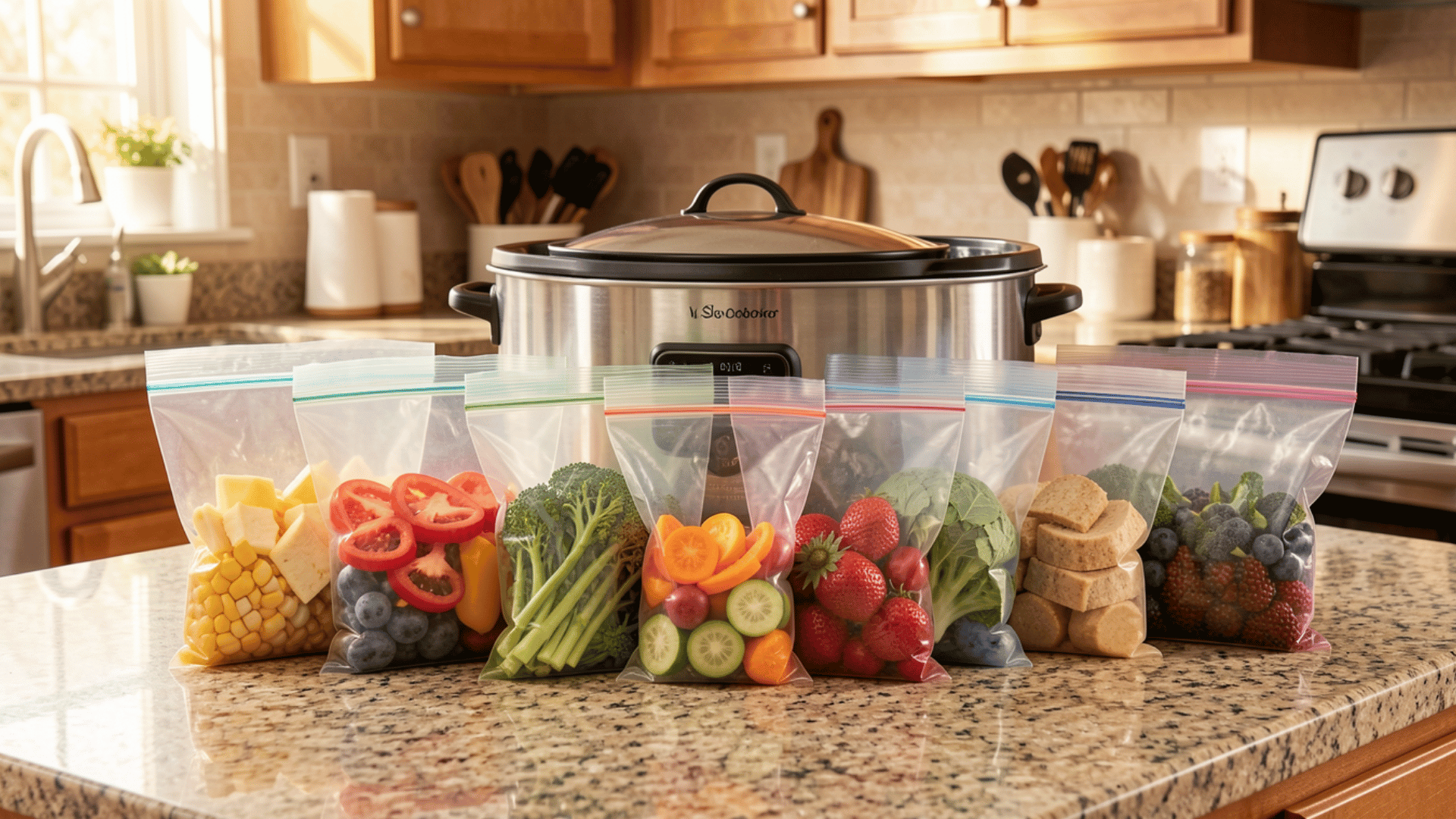
Dump bags simplify slow cooker usage by pre-portioning ingredients for freezing. The core idea is to combine raw components in a freezer bag, expel air, seal, and store. When ready, dump the contents into the slow cooker for hands-off cooking. This differs from traditional meal prep by avoiding initial cooking, preserving freshness and reducing prep time.
Key advantages include:
- Convenience: Assemble multiple meals in one session for weeks of ready options.
- Cost Efficiency: Buy ingredients in bulk or on sale, then freeze to avoid waste.
- Health Focus: Control portions and ingredients for balanced nutrition, incorporating proteins, vegetables, and starches.
- Versatility: Suitable for various diets, including gluten-free, dairy-free, and vegetarian adaptations.
High demand for this method stems from busy lifestyles, as evidenced by online communities like Reddit’s r/slowcooking, where users share recipes and seek recommendations for complete meals beyond basic stews.
Freezer-Safe Ingredients for Dump Bags
Selecting appropriate ingredients ensures meals freeze without quality loss. Focus on items that maintain texture and flavor post-freezing and slow cooking.
Recommended Ingredients
- Proteins: Raw chicken thighs, beef chunks, pork shoulder, ground turkey, or plant-based options like lentils and beans. Avoid delicate items like fresh seafood, which can overcook.
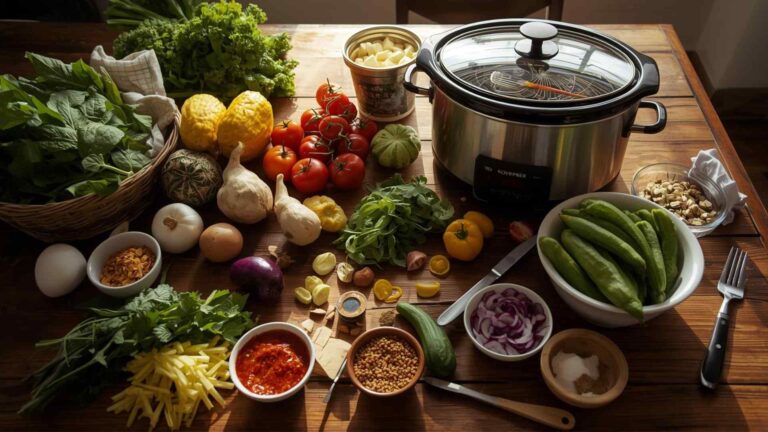
- Vegetables: Hardy types such as carrots, onions, potatoes, bell peppers, celery, and frozen broccoli florets. These release moisture during cooking, creating natural sauces.
- Sauces and Seasonings: Tomato-based sauces, broths (if minimal), soy sauce, herbs, spices, garlic, and ginger. Limit liquids to prevent dilution.
- Starches: Rice or pasta added post-thaw to avoid mushiness; beans or potatoes work well frozen raw.
Items to Avoid Freezing
- Dairy (e.g., cream, cheese): Add during the last 30 minutes of cooking to prevent separation.
- Delicate pasta or rice: Incorporate cooked versions toward the end.
- Leafy greens like spinach: Wilt excessively; add fresh at serving.
- Fresh broccoli: Use frozen to maintain firmness.
For vegetarian adaptations, swap meats with tofu, chickpeas, or mushrooms. Most recipes are naturally gluten-free if using tamari instead of soy sauce.
Meal Prep Workflow
Efficient prep turns dump bags into a routine. A structured workflow minimizes time, often allowing 6-8 meals in under an hour.
Step-by-Step Process
- Planning: Select recipes based on servings (typically 4-6 per bag). Aim for variety to avoid repetition—mix chilis, curries, and roasts.
- Shopping: Purchase in bulk. For example, buy 10 pounds of chicken when on sale.
- Assembly: Chop vegetables and portion proteins. Use gallon-sized freezer bags; label with recipe name, cooking instructions, and freeze date.
- Freezing: Lay bags flat for space-efficient stacking. Use vacuum sealing for extended storage up to 6 months.
- Storage: Standard freezers hold 10-15 bags in a 12×12-inch space; no extra freezer needed for starters.
To visualize the workflow, consider this flowchart:
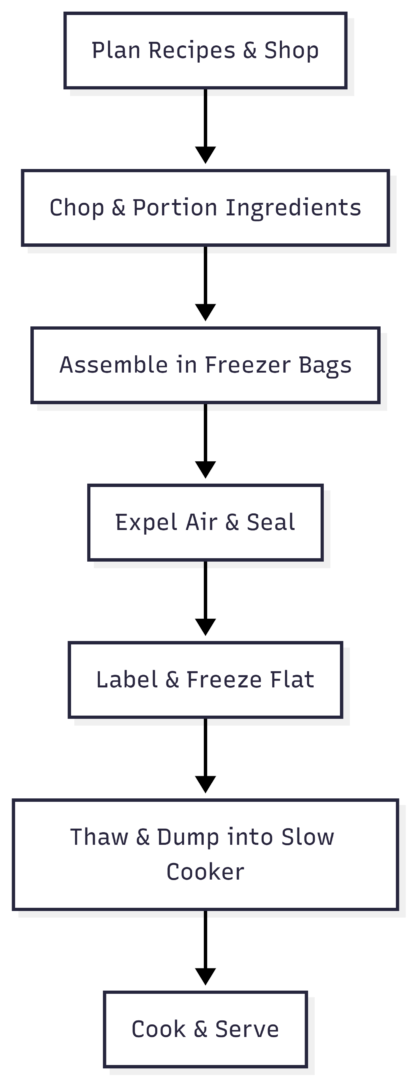
This sequence ensures quick assembly and consistent results.
Time-Saving Shortcuts
- Use pre-chopped vegetables or frozen mixes.
- Prep in batches: Chop all onions at once.
- Tools: A sharp knife, cutting board, and bag stands speed the process.
Thawing Safely
Proper thawing prevents bacterial growth and ensures even cooking.
Methods
- Refrigerator Thaw: Place bag in fridge overnight. Ideal for safety; contents may not fully thaw but fit the cooker.
- Cold Water Bath: Submerge sealed bag in cold water, changing every 30 minutes. Use within 2 hours post-thaw.
- Microwave: Transfer to microwave-safe dish; thaw on defrost setting, then cook immediately.
Avoid room-temperature thawing to stay within USDA guidelines (below 40°F). Frozen meals can go directly into the slow cooker, but add 1-2 hours to cooking time.
Safety Tips
- Freeze at 0°F to inactivate microbes.
- Cook to internal temperatures: 165°F for poultry, 160°F for ground meats, 145°F for beef/pork.
- Consume thawed meals within 24 hours.
Texture Tips for Optimal Results
Freezing and slow cooking can alter textures, but adjustments maintain quality.
Common Issues and Fixes
- Mushy Vegetables: Cut larger chunks; reduce cooking time if needed.
- Dry Meats: Use fattier cuts like thighs over breasts; avoid overcooking.
- Sauce Separation: Stir midway; add thickeners like cornstarch slurry at end.
- Potatoes: Freeze raw; they hold shape well in stews.
For chicken breasts, which some users note turn stringy, opt for shorter cooks (4-6 hours on low) or switch to thighs. Test recipes in your slow cooker model, as sizes vary—6-quart models cook faster than 4-quart.
Adjust based on feedback: If veggies crunch, extend time; if mushy, shorten.
Recommended Slow Cookers: Specifications and Prices
Choosing the right slow cooker enhances dump bag success. Based on popular recommendations from communities like r/slowcooking, here’s a table of top models. Prices are approximate as of early 2026, sourced from major retailers.
| Model | Capacity | Features | Specifications | Price (USD) |
|---|---|---|---|---|
| Crock-Pot 6-Quart Programmable | 6 quarts | Digital timer, auto-warm, locking lid | Dishwasher-safe stoneware, 3 heat settings | $50-60 |
| Hamilton Beach Set & Forget | 6 quarts | Probe thermometer, clip-tight lid, programmable | 120V, 200W, removable insert | $55-65 |
| Instant Pot Duo 7-in-1 | 6 quarts | Multi-function (slow cook, pressure, etc.), app control | Stainless steel inner pot, 1000W | $90-100 |
| All-Clad Gourmet Slow Cooker | 7 quarts | Cast-aluminum insert, precise temperature control | 4 heat settings, glass lid | $200-250 |
| Ninja Foodi PossibleCooker Pro | 8.5 quarts | 8 functions, sear/sauté option | Nonstick pot, 1500W | $130-150 |
These models support dump bags well; larger capacities suit batch prepping. For beginners, the Crock-Pot offers reliability at a budget price.
Sample Recipes for Dump Bags
Drawing from community favorites and expert tips, here are complete meal recipes that freeze well. Each serves 4-6; prep time under 15 minutes.
1. Beef Stew
- Ingredients: 2 lbs beef chunks, 4 carrots (chopped), 3 potatoes (diced), 1 onion (sliced), 2 celery stalks (chopped), 2 cups beef broth, 2 tbsp tomato paste, 1 tsp thyme, salt/pepper.
- Assembly: Combine in bag; freeze.
- Cook: 8 hours on low from thawed. Add peas last 30 minutes.
2. Chicken Curry
- Ingredients: 1.5 lbs chicken thighs, 1 can coconut milk, 2 bell peppers (sliced), 1 onion, 3 garlic cloves (minced), 2 tbsp curry powder, 1 tsp ginger.
- Assembly: Mix raw; freeze (add coconut milk post-thaw if concerned).
- Cook: 6 hours on low. Serve with rice.
3. Vegetarian Chili
- Ingredients: 2 cans beans (drained), 1 can diced tomatoes, 1 onion, 2 carrots, 1 bell pepper, 2 tsp chili powder, 1 tsp cumin.
- Assembly: Dump and seal.
- Cook: 6-8 hours on low. Top with cheese after cooking.
4. Pork Carnitas
- Ingredients: 2 lbs pork shoulder, 1 orange (juiced), 1 lime (juiced), 4 garlic cloves, 1 onion, 1 tsp oregano, 1 tsp cumin.
- Assembly: Combine; freeze.
- Cook: 8 hours on low. Shred and crisp in oven.
5. Lentil Soup
- Ingredients: 1 cup lentils, 4 carrots, 2 celery, 1 onion, 4 cups vegetable broth, 1 tsp rosemary.
- Assembly: Bag raw.
- Cook: 7 hours on low.
For variety, users recommend adapting these—add starches like quinoa post-cook. A database of recipes from r/slowcooking includes over 100 options.
Addressing Common Concerns: 17 Key Insights
Based on frequent queries, here’s in-depth guidance.
- Taste Quality: Meals taste fresh, not like leftovers, as they’re cooked once from raw.
- Storage Needs: Standard freezers suffice; stack flat bags efficiently.
- Essential Tools: Knife, board, peeler, 6-quart slow cooker (e.g., Crock-Pot at $50).
- Freezing Raw: Safe and effective; even potatoes work.
- Meat Safety: USDA-approved; freezing halts microbes.
- Using Frozen Meat: Add directly to bags without thawing.
- Liquid Levels: Minimal needed; ingredients release juices.
- Nutrition and Texture: Minimal changes; tastes identical to fresh.
- Prep Time: 15 minutes per meal; batch for speed.
- Shortcuts: Pre-cut veggies, choppers.
- Shelf Life: 3-6 months in standard freezers.
- Thawing: Overnight in fridge best; alternatives available.
- Cooking Times: 6-8 hours low; adjust per model.
- Servings: 4-6 standard; scale by adding protein.
- Cost Savings: Bulk buys, sales; stock for lean times.
- Recipe Adaptations: Most work; avoid certain items.
- Dietary Tweaks: Vegetarian options plentiful; easy swaps for allergens.
Advanced Tips and Community Insights
From r/slowcooking, users praise dump bags for work lunches, potlucks, and simple meals for beginners or elders. Favorites include “true” slow cooker recipes like pulled pork. For obsession-level prepping, try marinated options like honey Dijon chicken (1-minute prep).
Experiment with multicookers for versatility, though traditional slow cookers excel for low-and-slow. Longest cooks reported: 12-24 hours for stocks.
In summary, slow cooker dump bags transform meal prep into an efficient, flavorful system. With proper ingredients, workflows, and tools, achieve weeks of meals effortlessly. For more, explore online communities or cookbooks dedicated to this method.
Please share this Slow Cooker Dump Bags {Freeze and Go Meals} with your friends and do a comment below about your feedback.
We will meet you on next article.
Until you can read, Which vegetables are best in the slow cooker?