Best Types of Potatoes for Slow Cooker Meals
Choosing the wrong potato for your slow cooker is one of the most common reasons a dish ends up as a starchy, broken-down mess. The good news is that once you understand the basic science of potato starch and moisture content, making the right call becomes second nature. This guide breaks down every major potato type, how they behave under low-and-slow heat, and exactly which variety to reach for depending on what you’re cooking.
Why Potato Type Matters in a Slow Cooker
Slow cookers trap steam and hold temperatures between roughly 190°F (88°C) on low and 212°F (100°C) on high for hours at a time. That prolonged, moist heat is very different from a quick roast or a brief boil — it has a cumulative breaking effect on starch granules and cell walls.
Potatoes fall into three broad categories based on their starch-to-moisture ratio:
- Starchy potatoes (high starch, low moisture) include Russets and Idaho potatoes. They are fluffy when cooked but disintegrate quickly in liquid. In a slow cooker, they turn to mush and thicken the surrounding broth — useful in some applications, disastrous in others.
- Waxy potatoes (low starch, high moisture) include red potatoes, fingerling potatoes, and most baby potatoes. Their cells hold together under prolonged heat, making them the default choice when you need potatoes that retain a defined bite.
- All-purpose potatoes (moderate starch, moderate moisture) include Yukon Gold and Maris Piper. These sit in the middle — creamy without total collapse, holding shape better than a Russet but still offering some thickening effect.—
The Best Potato Types for Slow Cooker Cooking
Baby Potatoes (Red or Gold)
Baby potatoes are the top pick for the vast majority of slow cooker recipes. Their small size means you can leave them whole or simply halve them, eliminating the need to cut them into uniform chunks. The skin acts as a natural casing, locking in moisture and starch so the potato holds its shape even after six or more hours on low. Whether you use baby reds or baby golds, the result is a tender, intact potato that absorbs surrounding flavors without dissolving into the sauce.
Yukon Gold Potatoes
Yukon Golds occupy the sweet spot between creamy and sturdy. They have enough starch to develop a silky, buttery interior but retain enough structure to survive a long braise. For recipes like pot roasts, chicken stews, and braised lamb, Yukon Golds deliver the ideal texture — soft and yielding without losing their shape entirely. They also have a naturally rich, slightly sweet flavor that pairs well with savory braises.
Red Potatoes
Red potatoes are among the firmest waxy varieties available at most grocery stores. Their dense, moist flesh resists breakdown, making them ideal for dishes where the potato needs to look presentable after hours of cooking. Red potatoes also bring a pop of color from their skins, which is worth preserving — leaving the skin on adds texture, nutrients, and visual appeal.
Fingerling Potatoes
Fingerlings are a premium option when presentation matters. Their elongated shape and thin skin mean they cook evenly, develop a slightly buttery flavor, and plate beautifully whole. They take well to slow-cooked herb sauces, creamy casseroles, and rustic stews alike.
Russet Potatoes — Use With Intention
Russets are not the enemy in a slow cooker — they’re just misunderstood. Their high starch content means they will break down and thicken whatever liquid surrounds them. This is actually desirable in a potato soup or a thick Irish stew where body and creaminess are the goal. The mistake most cooks make is adding russets to a dish where they expect the potato to hold its shape. Use russets intentionally for thickening, and switch to waxy or all-purpose varieties when shape matters.
Potato Type Quick Reference Table
| Potato Variety | Starch Level | Shape Retention | Best Slow Cooker Use |
|---|---|---|---|
| Russet / Idaho | High | Poor | Creamy soups, thickened stews |
| Sweet potato | High-medium | Medium | Stews, curries, chunky soups |
| Yukon Gold | Medium | Good | Roasts, braises, general stews |
| Red potato | Low | Excellent | Any stew, casserole, pot roast |
| Baby potato (gold/red) | Low | Excellent | All-purpose, dump-and-go recipes |
| Fingerling | Low | Excellent | Elegant stews, herb braises |
| Purple potato | Medium-low | Good | Color contrast, chunky soups |
Key Preparation Tips for Slow Cooker Potatoes
Size is the single most controllable variable
Slow cookers do not deliver uniform heat across the entire vessel. The area near the base and sides runs hotter; the center of the pot is cooler. Consistent chunk size is the only way to ensure even cooking. For most recipes, cut potatoes into 1–2 inch pieces. If using baby potatoes, halve anything larger than a golf ball. Potatoes that are too large will still be firm at the center when everything else is done; potatoes that are too small will dissolve.
Place potatoes at the bottom
Hard vegetables like potatoes and carrots belong at the bottom of the slow cooker insert, positioned directly against the heated walls and base. Meat and softer vegetables go on top. This placement ensures the densest ingredients receive the most heat for the longest time.
Peel or don’t peel?
For waxy varieties like red potatoes, baby potatoes, and fingerlings, leaving the skin on is almost always the right call. The skin adds flavor, holds the potato together, and provides a pleasant textural contrast. For russets used in a creamy soup that will be blended or mashed, peeling makes sense. For Yukon Golds in a stew, it’s a personal preference — the skin is thin and becomes tender during cooking.
Cooking times by heat setting
The table below reflects typical ranges for 1–2 inch potato pieces in a liquid-based slow cooker recipe. Actual times vary based on the model, fill level, and recipe liquid content.
| Potato Setting | Low Heat | High Heat |
|---|---|---|
| Whole baby potatoes (small) | 5–6 hours | 3–4 hours |
| Halved baby potatoes | 4–5 hours | 2.5–3.5 hours |
| 1–2 inch cubed potatoes | 5–6 hours | 3–4 hours |
| Sliced potatoes (¼ inch) | 3–4 hours | 2–3 hours |
| Whole large potatoes | 8–10 hours | 5–6 hours |
Note: Some newer slow cooker models run cooler than older ones, which can extend these times. If your potatoes are consistently underdone, cut pieces smaller and start on high for the first hour before dropping to low.
Slow Cooker Potato Decision Flow
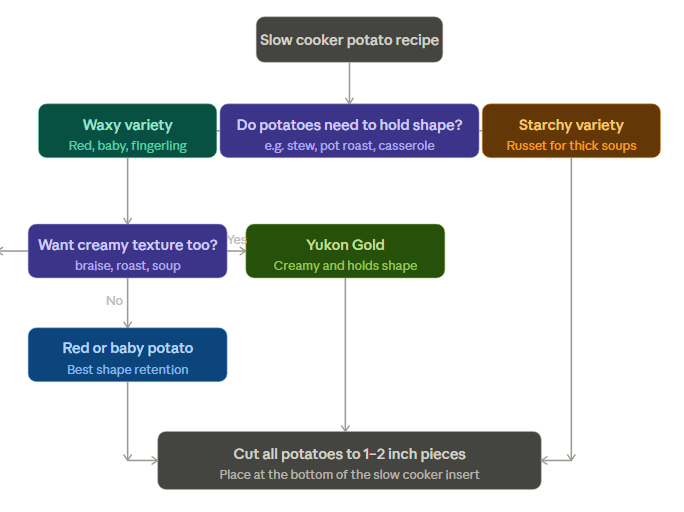
Matching Potato Variety to Recipe Type
Different slow cooker dishes have different structural needs. Here’s how to match the potato to the application:
- Beef or lamb stew: Yukon Gold or red potatoes. These varieties absorb the rich braising liquid while remaining intact throughout a 6–8 hour cook. Red potatoes especially hold definition, which matters when the stew is served at the table.
- Creamy chicken and potato casserole: Baby Yukon Golds or halved baby reds. Their smaller surface area means faster, more even cooking and a naturally creamy interior without any prep work beyond halving.
- Potato soup (blended or chunky): Russets for a smooth, creamy, silky soup; Yukon Golds for a chunky version where some pieces remain whole. Russets dissolve and emulsify into the broth, creating body without the need for additional cream or flour.
- Pot roast with vegetables: Baby potatoes, whole or halved, placed at the base of the cooker. They braise in the meat juices and emerge deeply flavored and perfectly tender after 8 hours on low.
- Slow cooker “roasted” potatoes: Yukon Golds or baby potatoes, tossed in olive oil and seasoning, cooked on high for 2–3 hours. The result is not a crispy roast potato — but it is a deeply savory, tender potato with concentrated flavor.
- Indian or Thai-style curry: Waxy varieties hold up against the acidic tomato base and bold spices in a long curry. Red potatoes or baby potatoes cut into cubes are the standard choice. Starchy potatoes will disintegrate into the sauce within a few hours.
Common Mistakes and How to Fix Them
- Potatoes still hard after 6 hours: The pieces are too large, or they were packed in the center of the cooker away from the heating element. Cut smaller, position at the bottom, and if needed, start on high for the first 1–2 hours.
- Potatoes turned to mush: You used a high-starch variety (Russet or sweet potato) in a dish that required shape, or the pieces were cut too small. Switch to a waxy variety and cut larger.
- Uneven cooking — some pieces cooked, others raw: Inconsistent chunk sizes. Use a kitchen scale or a ruler guide to cut all pieces within a half-inch of each other.
- Potatoes are waterlogged and tasteless: Too much liquid. Potatoes in a slow cooker do not need to be submerged. They release moisture during cooking. Reduce the initial liquid by 25% compared to a stovetop recipe.
- Potatoes turned gray or discolored: Oxidation before cooking, or contact with acidic ingredients like tomatoes at the start. Soak cut potatoes in cold water until ready to add, or add acidic ingredients in the last 1–2 hours only.
Final Recommendations
For the vast majority of slow cooker recipes, baby potatoes (red or gold) and Yukon Gold potatoes are the most reliable choices. They perform well across soups, stews, roasts, and casseroles, require minimal preparation, and deliver a consistently pleasing texture. Red potatoes are the best choice when shape retention is the absolute priority. Russets should be reserved specifically for dishes where you want the potato to break down and add body to the sauce.
The two most impactful variables beyond variety are cut size and placement. Keep pieces between 1 and 2 inches, place them at the bottom of the insert, and use a waxy or all-purpose variety — and your slow cooker potato dishes will come out right virtually every time.
Please share this Best Types of Potatoes for Slow Cooker Meals with your friends and do a comment below about your feedback.
We will meet you on next article.
Until you can read, The best pork cuts for slow cooking