The 7 Magical Ingredients to Add to Any Slow Cooker
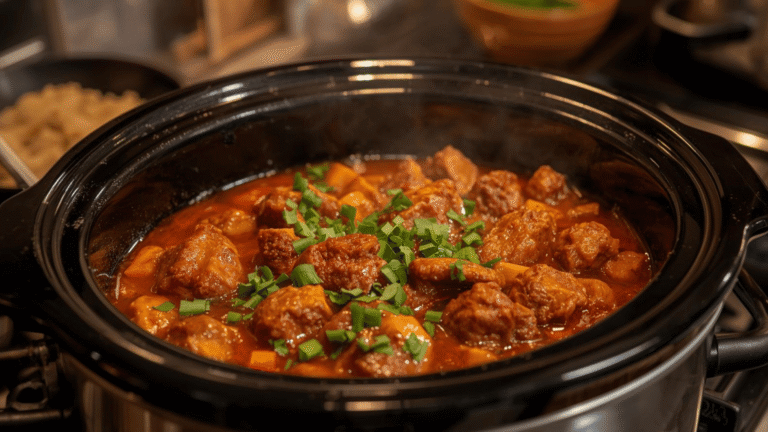
The slow cooker is one of the most liberating appliances in the kitchen — dump everything in, walk away, and return to a hot meal. But if you’ve cooked with one long enough, you’ve noticed something: slow-cooked food is convenient and comforting, but rarely spectacular. Flavors mellow out, textures soften, and that vibrant punch you get from stovetop cooking gets lost somewhere in those eight hours.
The fix isn’t complicated. There are specific ingredients — seven of them — that behave exceptionally well under slow, moist heat. Some deepen. Some hold their structure. Some add complexity that would take hours of stovetop reduction to achieve. Add these to your pantry and your baseline slow cooker result jumps from a B to an A-minus without extra effort.
Here’s what they are, why they work, and how to use them.
Why Most Slow Cooker Meals Fall Flat
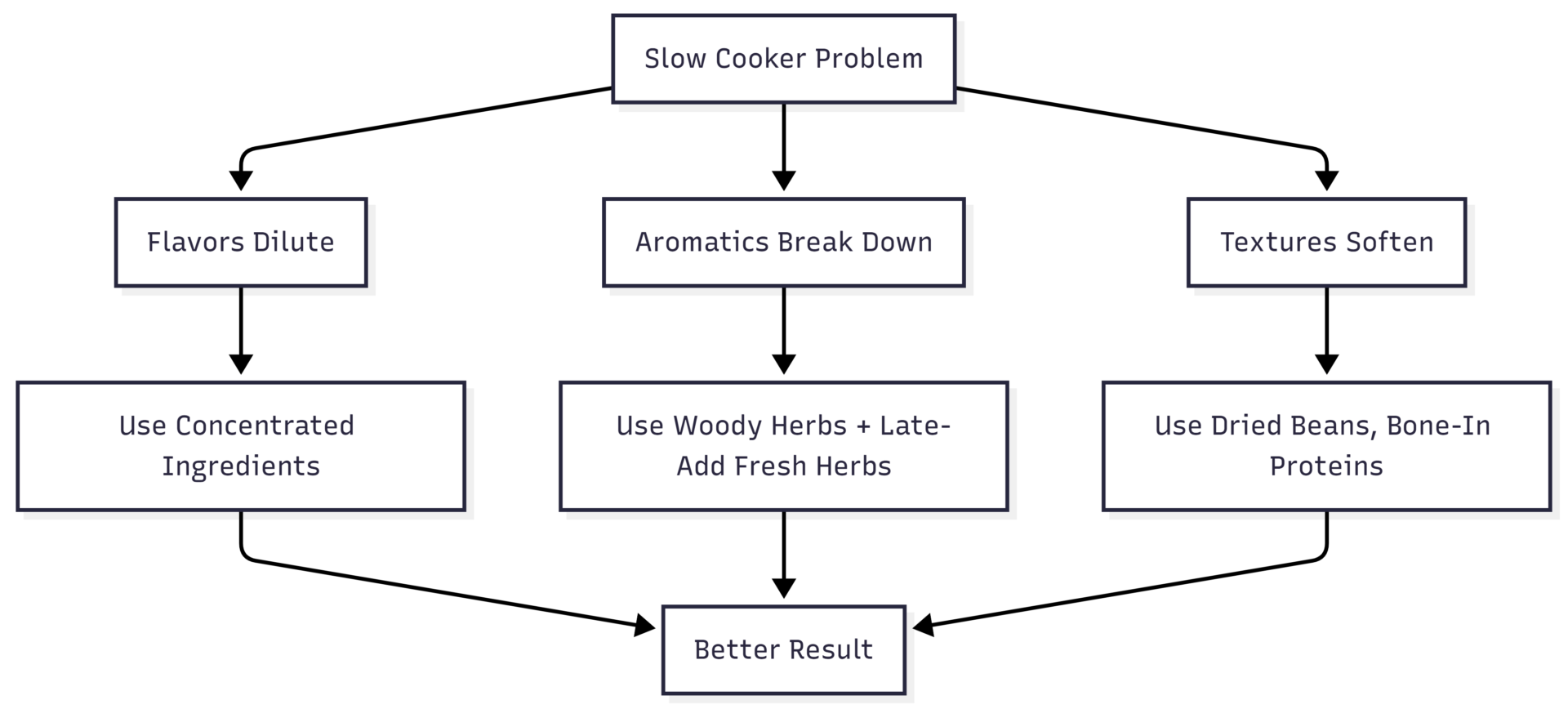
Before the list, it’s worth understanding the problem. A slow cooker operates between 170°F and 280°F depending on the setting, and it traps steam rather than releasing it. That means:
- Volatile aromatic compounds (the ones that give fresh herbs their brightness) evaporate or break down
- Liquid accumulates instead of reducing, diluting flavor
- Delicate proteins and starches overcook and turn mushy
- Spices that need dry heat to bloom instead sit in water, turning flat or bitter
The solution is choosing ingredients that either thrive under these conditions or get added at the right time.
The 7 Magical Ingredients
1. Woody Herbs (Rosemary, Thyme, Sage)
Fresh leafy herbs like basil and cilantro disintegrate after hours of slow cooking — you end up with a greenish paste that adds bitterness, not flavor. Dried herbs fade out completely after the first few hours and leave the dish tasting muddy.
Woody herbs are the exception. Rosemary, thyme, and sage have tough, fibrous stems and essential oils that release slowly and evenly under prolonged heat. They don’t fall apart, and they don’t turn bitter. Add them at the start and they’ll still be contributing flavor when the lid comes off.
If you want bright, herby notes like basil, parsley, or cilantro, add them in the last 15 minutes. That’s your flavor layering strategy: woody herbs early for depth, fresh soft herbs late for brightness.
Timing guide:
| Herb Type | When to Add | Examples |
|---|---|---|
| Woody (dried or fresh) | Start of cooking | Rosemary, thyme, sage, bay leaf |
| Semi-robust | Final 30–45 minutes | Oregano, marjoram |
| Soft/leafy (fresh) | Final 10–15 minutes | Basil, cilantro, parsley |
| Garnish only | After serving | Chives, dill, microgreens |
2. Whole or Sliced Garlic (Not Minced)
Garlic is one of the few aromatics that actually improves with slow cooking. On the stovetop, there’s always a risk of that sharp, raw-garlic bite that comes from undercooking, or the acrid bitterness from overcooking for 30 seconds too long. In a slow cooker, the long, controlled heat mellows garlic into something sweet and nutty — richer than raw, without any harshness.
The key is cutting it into thick slices or leaving cloves whole rather than mincing. Minced garlic releases all its sulfur compounds immediately and they cook off over hours, leaving almost nothing behind. Thick slices hold up, slowly releasing flavor throughout the cook time.
For a 6–8 hour cook, 6 to 8 whole cloves is not excessive. They’ll soften to a spreadable consistency and add depth you can’t get any other way.
3. Whole Spices and Bloomed Ground Spices
Ground spices like cumin, chili powder, paprika, coriander, cardamom, and cinnamon behave unpredictably in slow cookers. When added raw to wet ingredients, they can taste bitter and sharp for the first half of cooking, then fade out entirely by the end.
There are two solutions. The first is to bloom them — cook ground spices briefly in oil in a pan before adding everything to the slow cooker. This activates fat-soluble flavor compounds and builds a more complex base. The second is to use whole spices (whole cumin seeds, cinnamon sticks, cardamom pods, star anise) which release gradually over the cooking period without burning out.
For chili, stews, and braises, the blooming technique consistently produces a more layered, complex result.
Spice behavior in slow cookers:
| Spice Type | Behavior | Best Practice |
|---|---|---|
| Delicate ground (cumin, coriander) | Fades quickly | Bloom in oil first |
| Robust ground (chili powder, paprika) | Holds reasonably | Bloom if possible |
| Whole spices (cinnamon, star anise) | Releases steadily | Add at start |
| Finishing spices (smoked paprika) | Volatile compounds | Add last 20 min |
4. Boxed or High-Quality Canned Tomatoes
Most home cooks reach for standard canned tomatoes without thinking about it. For slow cooker recipes, tomato quality matters more than in other cooking methods because there’s no reduction to concentrate and balance flavor — what you add is largely what you get.
Vacuum-sealed boxed tomatoes (common in European cooking, with brands like Pomì available in the US) retain more of the fresh tomato flavor because they’re processed differently. The result in a long-cooked sauce or stew is noticeably brighter, with more texture and less of the tinny, flat aftertaste that cheap canned tomatoes can produce.
If you can only find canned, go for whole peeled tomatoes and crush them yourself rather than using pre-diced. Diced tomatoes are often treated with calcium chloride to keep their shape, which means they don’t break down and integrate into sauces the way whole tomatoes do.
5. Dried Beans (Not Canned)
Canned beans are already fully cooked. Put them in a slow cooker for eight hours and you get bean paste. Dried beans, on the other hand, are made for the slow cooker — they hydrate and cook slowly to firm, creamy perfection with a texture no canned bean can match.
No presoaking is required for most beans in a slow cooker. Add them dry with enough liquid (typically 3 cups of water or broth per 1 cup of dried beans), and they’ll be perfectly cooked in 6–8 hours on low. The liquid they cook in also develops into a naturally thickened, flavorful broth.
One important exception: kidney beans contain phytohaemagglutinin, a toxin that requires high-heat boiling to neutralize. Boil dried kidney beans for at least 10 minutes before adding to a slow cooker.
Dried vs. Canned Beans Comparison:
| Factor | Dried Beans | Canned Beans |
|---|---|---|
| Texture after 8 hrs | Firm, creamy | Mushy, broken down |
| Flavor | Richer, more complex | Neutral, sometimes tinny |
| Prep required | None (no presoak needed) | Drain and rinse |
| Cost (per serving) | Lower | Higher |
| Best use in slow cooker | All-day cooks | Added in last 60–90 min |
6. Umami Boosters — Anchovies, Worcestershire, Soy Sauce, or Mustard
This is where the magic gets less obvious. A tablespoon of soy sauce in a beef stew that contains no Asian ingredients at all will not make the stew taste Asian. It will make it taste more like itself — deeper, more savory, more satisfying. That’s the effect of umami, the fifth taste, which slow cooking depletes as volatile compounds break down.
Anchovies are perhaps the most powerful umami booster available. They dissolve completely during slow cooking, leaving no fishiness behind, only a rounded, complex savory depth. One or two fillets stirred into a beef braise, tomato sauce, or lamb stew transforms the dish.
Worcestershire sauce works on similar principles — it contains anchovies, tamarind, molasses, and vinegar, all of which contribute different flavor dimensions. Soy sauce adds salt and umami together. Mustard (both as seeds and prepared) holds up remarkably well under low heat and adds a bright, cutting edge that prevents stews from tasting heavy.
Umami ingredient quick guide:
| Ingredient | Amount per dish | Effect | Best for |
|---|---|---|---|
| Anchovy fillets | 1–2 fillets | Deep savory roundness | Beef, lamb, tomato dishes |
| Worcestershire sauce | 1–2 tbsp | Complex savory-sweet | Beef, pork, hearty stews |
| Soy sauce | 1–2 tbsp | Salt + umami | Any meat-based dish |
| Dijon mustard | 1–2 tbsp | Zing + body | Chicken, pork, cream sauces |
| Tomato paste | 2–3 tbsp | Concentrated umami | Stews, braises, soups |
7. Bone-In, Skin-Off Chicken Thighs
If you cook chicken in a slow cooker regularly, you’ve probably experienced the two common failures: rubbery, dried-out breast meat, or gelatinous chicken-skin soup from drumsticks. Neither is what you want.
The bone-in, skin-off chicken thigh solves both problems. The dark meat has enough fat and collagen to stay moist through long cooking without drying out the way white meat does. The bone adds flavor and body to the cooking liquid, improving the whole dish. Removing the skin before cooking prevents the rendered fat from creating a greasy, unpleasant texture in the sauce.
This cut is also among the most affordable protein options, which makes it especially practical for slow cooker cooking.
How to Layer Flavors for Maximum Depth
The difference between a good slow cooker meal and a great one often comes down to sequencing — what goes in when. The following framework applies to almost any savory slow cooker recipe:
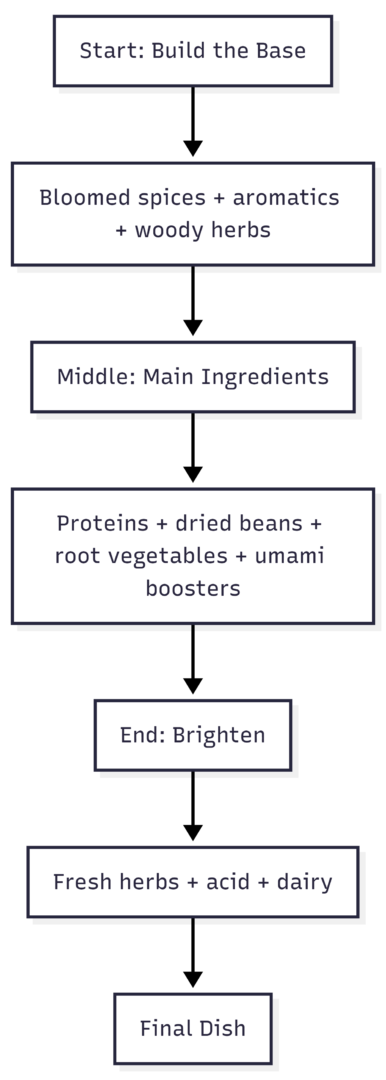
Early seasoning (at the start) is for salt, spices, aromatics, and robust ingredients that need time to develop. Under-salting at the start means flavors never properly integrate.
Late seasoning (last 15–30 minutes) is for dairy, fresh herbs, acid (citrus juice, vinegar), and any ingredient that will break down with heat. A splash of red wine vinegar or lemon juice stirred in before serving can rescue a dish that’s tasted flat all day.
Essential Slow Cooker Pantry Checklist
| Category | Must-Have Staples |
|---|---|
| Proteins | Chicken thighs (bone-in, skin-off), beef chuck, pork shoulder, dried lentils |
| Aromatics | Garlic, onions, celery, carrots |
| Tomatoes | Boxed crushed tomatoes, whole peeled canned, tomato paste |
| Beans/Legumes | Dried black beans, chickpeas, lentils, cannellini |
| Herbs | Rosemary, thyme, bay leaves, sage (dried); basil, parsley (fresh, for finishing) |
| Spices | Cumin, chili powder, smoked paprika, coriander, cinnamon |
| Umami Boosters | Soy sauce, Worcestershire, anchovy paste, Dijon mustard |
| Liquids | Chicken stock, beef stock, coconut milk |
| Thickeners | Cornstarch, plain flour |
| Dairy (for finishing) | Heavy cream, full-fat sour cream, cream cheese |
The Dairy Rule: A Quick Note
Dairy deserves its own mention because it’s the ingredient most likely to ruin a slow cooker dish. Milk, cream, and cheese will curdle, separate, or turn grainy if cooked for hours at low heat — the proteins coagulate and the emulsion breaks.
The rule is simple: add all dairy in the last 15–30 minutes of cooking. Use full-fat options (heavy cream, full-fat sour cream, cream cheese) because higher fat content provides more stability. If using sour cream or yogurt, temper it first — stir a few spoonfuls of the hot cooking liquid into the cold dairy before adding it to the pot. This prevents thermal shock and keeps the sauce smooth.
Final Thoughts
The slow cooker will never fully replace a good braise on the stovetop. But with the right ingredients — woody herbs, mellowed garlic, bloomed spices, quality tomatoes, dried beans, umami boosters, and the right cut of chicken — it gets significantly closer. The gap between convenient and genuinely delicious narrows considerably when you stock your pantry with these seven foundations and understand when each one belongs in the pot.
Slow cooking rewards patience and preparation. Get the ingredients right, sequence them correctly, and what comes out of that pot after eight hours can genuinely surprise you.
Please share this The 7 Magical Ingredients to Add to Any Slow Cooker with your friends and do a comment below about your feedback.
We will meet you on next article.
Until you can read, Common Slow Cooker Questions Answered by Cooking Experts