Which vegetables are best in the slow cooker?
Slow cookers transform simple ingredients into hearty, flavorful dishes with minimal effort. When it comes to vegetables, selecting the right ones and timing their addition is key to achieving optimal texture and taste.
This guide explores the best vegetables for slow cooking, distinguishing between hard and soft types, outlining cooking order, providing strategies to avoid mushy results, and offering a detailed timing chart. We’ll also delve into pairing ideas to elevate your meals. By understanding these elements, you can create balanced, nutritious slow-cooked recipes that highlight vegetables’ natural qualities.
Hard vs. Soft Vegetables: Understanding the Basics
Vegetables vary in density, water content, and fiber structure, which directly impacts how they perform in a slow cooker. Hard vegetables, often root-based or dense, withstand prolonged heat and moisture without breaking down excessively. These include carrots, potatoes, sweet potatoes, parsnips, turnips, onions, garlic, celery, butternut squash, and beets. Their sturdy composition allows them to absorb flavors from broths, spices, and other ingredients over hours of cooking, resulting in tender yet firm pieces that add substance to stews, soups, and roasts.
In contrast, soft vegetables have higher water content and delicate structures, making them prone to overcooking. Examples are zucchini, bell peppers, broccoli, cauliflower, green beans, yellow squash, Brussels sprouts, asparagus, and tender greens like spinach or kale. If added too early, they release excess moisture, leading to sogginess and loss of vibrant color and nutrients. The distinction is crucial: hard vegetables form the base of slow-cooked dishes, providing bulk and slow-releasing starches, while soft ones add freshness and variety when incorporated later.
This categorization isn’t arbitrary—it’s rooted in the science of plant cell walls. Hard vegetables have thicker cellulose layers that require more time to soften, whereas soft ones break down quickly under heat. For instance, a carrot’s beta-carotene remains stable during long cooks, enhancing sweetness, while zucchini’s high water (about 95%) can dilute flavors if not managed properly. By prioritizing hard vegetables for the bulk of cooking time and reserving soft ones for the end, you maintain a dish’s integrity.
Cooking Order: Layering for Even Results
The order in which you add vegetables to a slow cooker significantly affects the final outcome. Start with hard vegetables at the bottom, closest to the heat source. This positioning ensures they cook thoroughly, as they need the most exposure to break down tough fibers. Layer potatoes, carrots, onions, and parsnips first, followed by any proteins like meat or beans if using. These base layers create a foundation that infuses the entire pot with aromatic compounds.
Midway through, introduce semi-hard or medium-density vegetables like bell peppers or Brussels sprouts. These benefit from partial cooking to soften without disintegrating. Finally, top with soft vegetables near the end to preserve their crispness and nutrients. This stratified approach mimics professional cooking techniques, where ingredients are added sequentially to harmonize flavors and textures.
Consider the slow cooker’s mechanics: heat rises from the bottom, and moisture circulates evenly in a sealed environment. Placing denser items low prevents them from blocking heat to lighter ones. For example, in a beef stew, add carrots and potatoes at the start, bell peppers after 4-5 hours on low, and spinach in the last 10 minutes. This method not only optimizes cooking but also enhances nutrient retention, as shorter exposure for soft veggies minimizes vitamin loss.
Avoiding Mushy Veggies: Key Strategies
Mushy vegetables ruin the appeal of slow-cooked meals, turning vibrant produce into unappetizing sludge. The primary culprits are overexposure to heat and excess moisture. To prevent this, cut hard vegetables into uniform 1-2 inch chunks. Larger pieces cook slower, maintaining structure, while smaller ones risk disintegrating. For instance, dice potatoes to about 1.5 inches for a 6-hour cook to ensure they soften without mushing.
Monitor liquid levels carefully—slow cookers trap steam, so start with minimal broth or water, adding more if needed. High-water vegetables like zucchini or tomatoes exacerbate mushiness, so add them sparingly or later. If using frozen vegetables, thaw them first to avoid introducing extra ice crystals that melt into water. Stirring too frequently can also break down veggies, so limit interventions to once or twice during cooking.
Another tip: use high heat for shorter periods with denser veggies to speed softening without prolonged simmering. For soft veggies, a quick sauté before adding can seal in juices and reduce breakdown. Acidic ingredients like tomatoes or vinegar help firm up cell walls, countering mushiness in items like green beans. By applying these techniques, you achieve a desirable tender-crisp balance, making your dishes more enjoyable.
Timing Chart: Precise Guidelines for Perfect Texture
To streamline your slow cooking, refer to this comprehensive timing chart. It categorizes vegetables by cook time on low (6-8 hours total) and high (3-4 hours total) settings, assuming a standard 4-6 quart slow cooker. Times are approximate and may vary based on cut size and cooker model.
| Vegetable Category | Examples | Add At (Low Setting) | Add At (High Setting) | Notes |
|---|---|---|---|---|
| Long Cook (Full Time) | Carrots, potatoes, sweet potatoes, onions, garlic, celery, butternut squash, parsnips, turnips, beets, dried beans | Beginning (6-8 hours) | Beginning (3-4 hours) | Cut into 1-2 inch pieces; layer at bottom for even cooking. |
| Medium Cook (Partial Time) | Bell peppers, cauliflower florets, broccoli florets, green beans, zucchini, yellow squash, Brussels sprouts, cabbage, collard greens, whole mushrooms, tomatoes (fresh or canned) | 1-2 hours remaining | 30-60 minutes remaining | Add thawed if frozen; monitor for desired tenderness. |
| Short Cook (Final Minutes) | Frozen peas, corn (fresh or frozen), spinach, kale, fresh herbs, asparagus, artichoke hearts, bok choy, snow peas, sugar snap peas, okra, escarole, Swiss chard | 10-20 minutes remaining | 5-10 minutes remaining | Stir in just to wilt or heat through; preserves color and crunch. |
This chart serves as a blueprint for recipes. For example, in a vegetable curry, start with potatoes and carrots, add cauliflower midway, and finish with peas. Adjust for personal preference—test doneness with a fork to avoid overcooking.
For a visual representation of the cooking process, here’s a flowchart illustrating the sequential addition of vegetables:
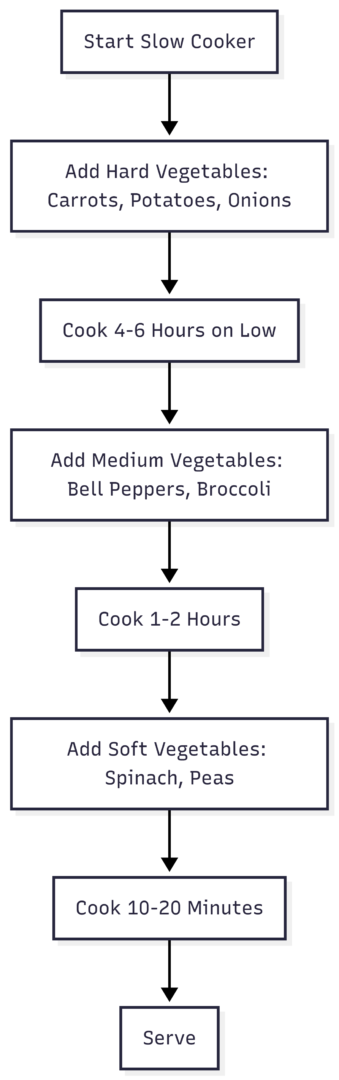
This diagram highlights the step-by-step order, ensuring no vegetable is overlooked.
Pairing Ideas: Enhancing Flavors and Nutrition
Pairing vegetables thoughtfully amplifies the slow cooker’s potential, creating balanced meals with complementary tastes and textures. Hard vegetables like carrots and potatoes pair excellently with proteins such as beef or chicken, absorbing savory juices in stews. Add onions and garlic for aromatic depth, forming a classic base that enhances everything from chili to pot roast.
For vegetarian options, combine butternut squash and sweet potatoes with lentils or chickpeas for a hearty curry, spiced with cumin and turmeric. Medium-cook veggies like bell peppers and zucchini shine in ratatouille-style dishes, paired with tomatoes and eggplant (added early if cubed large). This creates a Mediterranean flair, ideal with herbs like basil or oregano stirred in at the end.
Soft greens such as kale or spinach pair well with creamy elements, like in a white bean soup where they wilt into the broth for added nutrition without overpowering. Frozen peas and corn add sweetness to pair with spicy profiles, such as in a Thai-inspired coconut vegetable stew with cauliflower and green beans.
Experiment with global pairings: Asian-inspired with bok choy, snow peas, and mushrooms in a soy-ginger broth; or Mexican with corn, bell peppers, and zucchini in a black bean chili. Nutritionally, mix colors for diverse vitamins—orange carrots for vitamin A, green broccoli for vitamin K. These combinations not only boost flavor but also make meals more satiating and healthful.
Benefits of Slow Cooking Vegetables
Beyond convenience, slow cooking vegetables offers distinct advantages. It intensifies flavors as produce simmers in its own juices, mingling with seasonings for a richer profile than quick methods. This low-and-slow approach requires no added fats, promoting healthier outcomes.
Nutrient preservation is another perk: lower temperatures retain more water-soluble vitamins like C and B, compared to boiling where they leach out. Any released nutrients stay in the liquid, perfect for soups. The process also tenderizes fibrous veggies, improving digestibility without compromising benefits.
Ease is paramount—prep once, cook unattended, ideal for busy schedules. It minimizes kitchen cleanup, using one pot, and keeps heat contained, useful in warm climates.
Vegetables Not Suitable for Slow Cooking
While versatile, slow cookers aren’t ideal for all vegetables. Delicate salad greens like iceberg lettuce, romaine, arugula, or spring mix wilt instantly and lose appeal when heated, better suited raw. High-water items like cucumbers or celery leaves (beyond stalks) turn slimy.
Overripe or very soft produce exacerbates issues, so select firm specimens. If a vegetable thrives in quick cooks or raw, skip the slow cooker to avoid texture loss.
In summary, mastering vegetable selection and timing unlocks the slow cooker’s full potential. Focus on hard varieties for backbone, add soft ones strategically, and use the provided chart and tips for consistent results. Whether crafting a simple stew or complex curry, these principles ensure delicious, nutritious meals every time.
Please share this Which vegetables are best in the slow cooker? with your friends and do a comment below about your feedback.
We will meet you on next article.
Until you can read, Why Your Slow Cooker Meals Turn Out Watery (And How to Fix It)