Why are my slow cooked meals tasting bland?
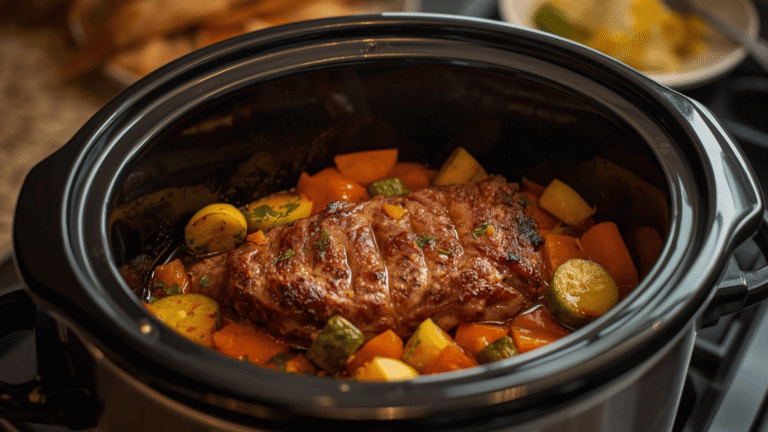
You load up the slow cooker, set it, go about your day, and come home to a kitchen that smells incredible. Then you taste it — and it’s flat. Dull. A C-minus version of what it could have been. If this is a familiar experience, you are not alone, and it is not your fault. The slow cooker itself is the problem — but only if you cook with it the same way you would a stovetop or oven. Once you understand why flavor disappears in a slow cooker, fixing it becomes straightforward.
Why Slow Cooker Food Loses Flavor
The slow cooker operates at low, sustained heat — typically between 77°C and 93°C (170°F–200°F) on low, and up to 149°C (300°F) on high. That gentle, prolonged cooking is great for breaking down tough cuts of meat and developing texture. But it works against flavor in three key ways:
- No browning, no depth. The Maillard reaction — the chemical process that creates the hundreds of rich, roasted flavor compounds in seared meat or caramelized onions — requires surface temperatures above 150°C (300°F). A slow cooker never gets that hot. If you add raw meat directly to the pot, you get steamed, pallid protein instead of deep, complex flavor.
- Acids cook away. Wine, tomatoes, citrus, and vinegar contribute brightness and balance. But after six hours at low heat, those acids have dissipated. What’s left tastes heavy and one-dimensional.
- Aromatics go flat. Garlic, onion, herbs, and spices release volatile aromatic compounds quickly. In a slow cooker, those compounds cook off over hours rather than concentrating. Raw garlic dumped in at the start? By dinner, it is barely there.
- Excess liquid dilutes everything. The slow cooker is a sealed, low-evaporation environment. Vegetables and meat release liquid as they cook. If you start with a full amount of stock, you end up with a watered-down sauce by the end.
Understanding these four mechanisms explains almost every bland slow cooker meal — and points directly to the fixes.
The Flavor-Building Framework
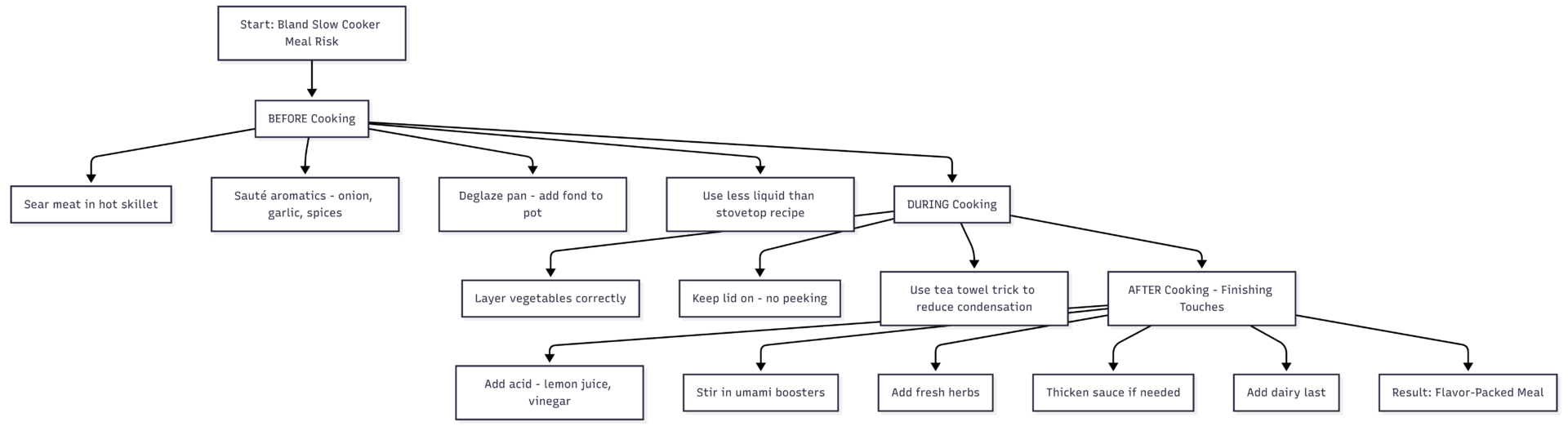
Think of slow cooker flavor in three stages: before, during, and after cooking. Most people only think about what goes in the pot. The real magic happens at the edges.
Before You Cook: Building the Flavor Foundation
Sear the Meat — Every Time
This is the single highest-impact change you can make. Before anything goes into the slow cooker, heat a skillet until it is very hot, add oil, and brown your meat in batches. You are not trying to cook it through — you want a deeply browned crust on the outside.
That crust is the Maillard reaction at work. It creates hundreds of flavor compounds that will carry through the entire dish during the long cook. Skipping this step means those compounds never exist. No amount of seasoning compensates for their absence.
After searing, do not rinse the pan. Deglaze it with a splash of wine, stock, or water, scraping up all the browned bits (called fond) stuck to the bottom. Pour that liquid into the slow cooker. It is concentrated flavor.
Sauté Your Aromatics
Onion, garlic, celery, and carrots are the backbone of most slow cooker recipes. When added raw, they soften but never develop flavor. When sautéed first in butter or oil until soft and fragrant — or caramelized further for deeper sweetness — they bring entirely different flavor compounds to the pot.
For spices: if your recipe uses ground cumin, coriander, paprika, or curry powder, toast them in the dry pan or fry them in oil for 60 seconds before adding anything else. This “blooms” the spices, releasing fat-soluble aromatic compounds that water alone cannot extract.
Reduce Your Liquid
This is critical and almost universally overlooked. Because the slow cooker traps steam, your ingredients will release moisture throughout cooking. A recipe that calls for 500ml of stock on the stovetop often needs only 250–300ml in the slow cooker — sometimes less. Start conservative. You can always add more liquid at the end; you cannot remove it easily.
During Cooking: Protecting What You Built
Layer Vegetables Correctly
Dense root vegetables — potatoes, carrots, parsnips, turnips — take longer to cook than meat. Place them at the bottom and sides of the pot, closest to the heat source. More delicate vegetables like courgette, peas, or leafy greens should go in during the final 30–60 minutes to avoid turning to mush.
Leave the Lid Alone
Every time you lift the lid, you lose 15–20 minutes of cooking time as heat escapes and must rebuild. More critically, you release the steam that has built up to create the cooking environment. Resist the urge to check in. If you must open the lid, do so quickly and replace it immediately.
The Tea Towel Trick
A widely used technique in the slow cooking community: place a clean folded tea towel between the pot and the lid before fitting it. The towel absorbs condensation that would otherwise drip back down into the food, diluting the sauce and washing out flavors. This is especially useful for dishes where you want a thicker, more concentrated result.
After Cooking: The Finishing Moves That Transform a Dish
This is where most slow cooker cooks leave points on the table. Finishing touches added in the last 10–15 minutes — or just before serving — make an enormous difference.
Add Acid to Brighten Everything
After hours of cooking, the dish tastes flat because residual acids have cooked off and flavors have merged into a single muted note. A small amount of acid added at the end re-introduces that brightness and balance.
| Acid | Best For | Amount to Start With |
|---|---|---|
| Lemon juice | Chicken, fish, creamy dishes | 1 tbsp |
| Lime juice | Mexican, Asian, curries | 1 tbsp |
| Red wine vinegar | Beef stews, braised meats | 1–2 tsp |
| Balsamic vinegar | Rich beef, tomato-based dishes | 1 tsp |
| White wine vinegar | Neutral acid; any dish | 1 tsp |
| Canned tomatoes (added late) | Tomato-based dishes | ½ can |
| Pickle/caper brine | Pork, chicken, hearty stews | 1–2 tsp |
| Sour cream or yogurt | Creamy dishes | 2–3 tbsp |
Start small — one to two tablespoons — taste, and add more if needed. The goal is not to taste the acid, but to notice that the dish suddenly tastes more like itself.
Boost Umami
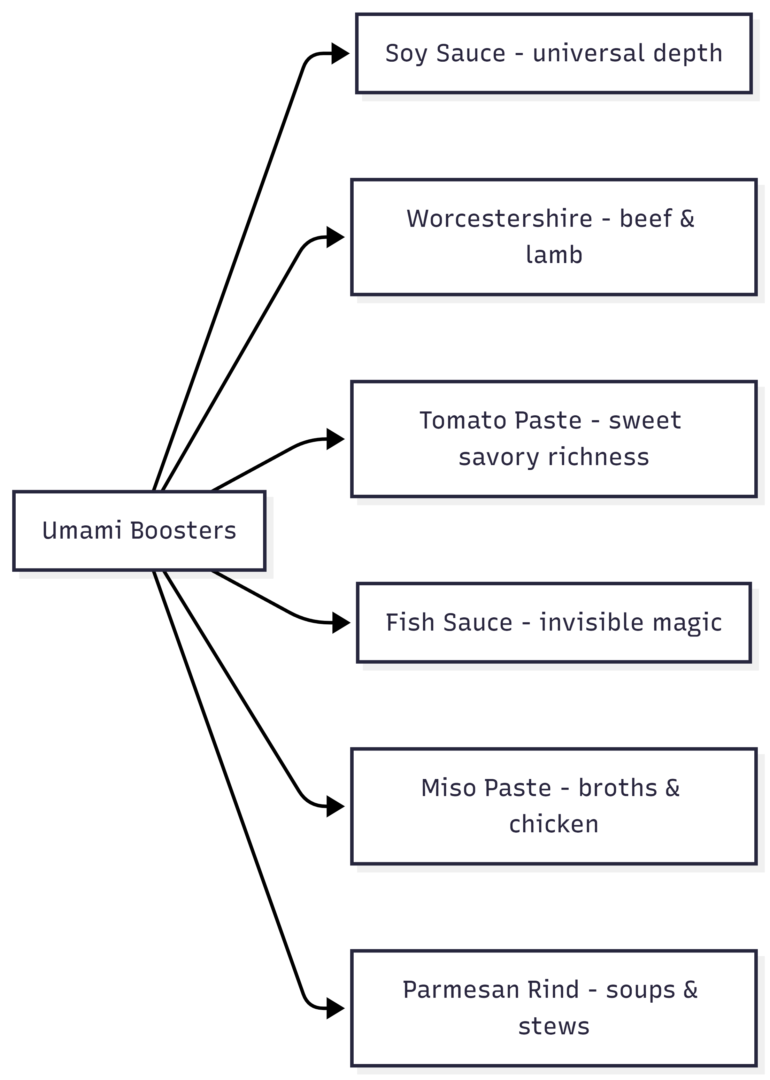
Umami is the savory, mouthwatering depth that makes food satisfying. Slow-cooked dishes often lack it because they rely on a single protein source. Add one or more of the following in the last 15 minutes:
- Soy sauce (1–2 tbsp) — adds depth without tasting Asian in most dishes
- Worcestershire sauce (1 tbsp) — classic for beef and lamb
- Tomato paste (1–2 tbsp, stirred in) — rich, concentrated savory sweetness
- Fish sauce (½–1 tsp) — sounds alarming, tastes like magic; nobody will identify it
- Miso paste (1 tbsp) — excellent in broths, chicken dishes, and even some stews
- Parmesan rind — added at the start, this slowly dissolves and adds enormous depth to soups and stews
Finish with Fresh Herbs
Dried herbs hold up reasonably well over a long cook — thyme, rosemary, bay leaves, and oregano are good additions at the start. Fresh herbs, however, cannot survive hours in a slow cooker. Their volatile aromatics evaporate within minutes of heat exposure.
Add fresh parsley, coriander/cilantro, basil, chives, or dill just before serving. They provide brightness and a hit of fresh flavor that contrasts with the deep, slow-cooked base — exactly what the dish needs.
Thicken the Sauce
Watery sauce dilutes flavor and makes a dish feel unsatisfying. If your sauce is too thin:
- Cornstarch slurry: mix 1 tbsp cornstarch with 2 tbsp cold water, stir into the pot, and cook on high for 15 minutes with the lid off
- Flour: whisk 1–2 tbsp flour into a little cold butter or water first to avoid lumps, then stir in
- Purée some of the cooked vegetables: scoop out a cup of the vegetables, blend them, and stir back in — this thickens the sauce while adding body and flavor
- Reduce on the hob: transfer the liquid to a saucepan and boil rapidly for 5–10 minutes until it concentrates
Seasoning: Early vs. Late — What Goes When
One of the most common mistakes is either seasoning everything at the start or leaving it all to the end. The reality is that different seasoning elements behave differently over time.
| Ingredient | Add When | Reason |
|---|---|---|
| Bay leaves | Start | Need time to infuse |
| Dried thyme, rosemary, oregano | Start | Hold up to long cooking |
| Whole spices (peppercorns, star anise) | Start | Slow, sustained release |
| Ground spices (cumin, paprika, coriander) | Bloom before adding | Fat-soluble; need heat to activate |
| Salt (base amount) | Start | Seasons throughout |
| Salt (final adjustment) | End | Dial in after reduction |
| Fresh garlic | Start or late | Start for mellow; late for punchy |
| Fresh herbs (parsley, basil, cilantro) | Last 5 minutes or at serving | Volatile aromatics evaporate |
| Acid (lemon, vinegar) | Last 10–15 minutes | Brightens; long cooking destroys it |
| Dairy (cream, yogurt, cheese) | Last 15–30 minutes | Prevents curdling and separation |
| Worcestershire, soy sauce | Last 15–30 minutes | Fine-tune depth without over-reduction |
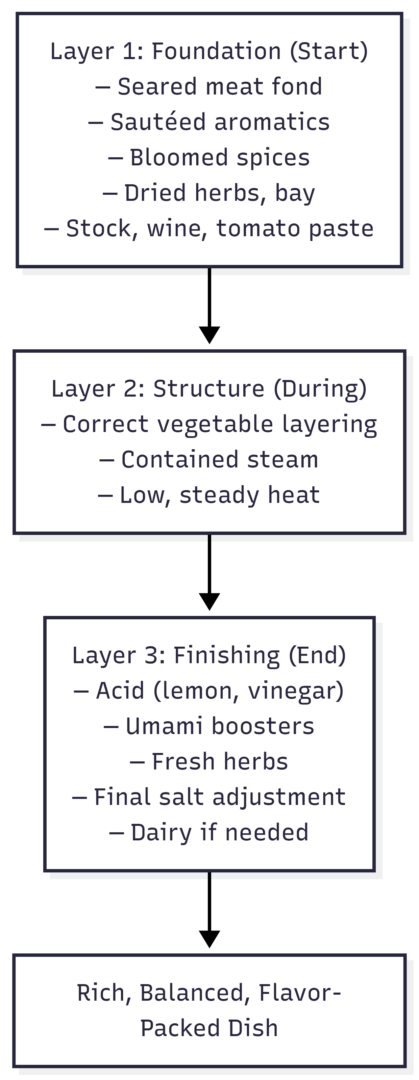
The Layering Principle
Think of flavor in layers that build on each other. The long cook handles structure and depth. Finishing handles brightness and freshness. Neither layer alone is complete.
Herbs vs. Spices: Timing Matters
Herbs and spices are not interchangeable in timing, even though recipes often treat them that way.
Spices (cumin, coriander, paprika, turmeric, cinnamon) are generally fat-soluble and heat-activated. To get the most from them, bloom them in oil or butter in a hot pan for 60–90 seconds before adding liquid. Added raw to cold liquid in a slow cooker, they contribute far less flavor.
Dried herbs (thyme, rosemary, oregano, bay) are more stable and benefit from extended cooking. Their flavor compounds extract slowly into liquid over time. Add them at the start.
Fresh herbs (parsley, basil, cilantro, chives, tarragon, dill) are delicate and should almost never be added at the start of a slow cooker recipe. Add them in the final five minutes or as a garnish at the table.
Exception: Rosemary and thyme can work fresh if added at the start in whole sprigs and removed before serving — their woody stems protect the oils somewhat during long cooking.
The Cut of Meat Makes a Bigger Difference Than You Think
Bland slow cooker meals are sometimes not about technique at all — they are about the wrong cut of meat. Lean cuts like chicken breast, pork loin, or beef sirloin have little fat and connective tissue. In a slow cooker, they dry out and turn fibrous without contributing flavor to the sauce.
The slow cooker is built for tough, fatty, collagen-rich cuts:
| Protein | Best Cuts for Slow Cooking |
|---|---|
| Beef | Chuck, brisket, short rib, oxtail, shin |
| Lamb | Shoulder, shank, neck |
| Pork | Shoulder (Boston butt), belly, ribs |
| Chicken | Thighs, drumsticks, whole legs |
The collagen in these cuts converts to gelatin over long cooking, giving the sauce body and richness that lean cuts simply cannot provide. That gelatin is a large part of why a proper slow-cooked braise feels satisfying and full-flavored.
Quick Troubleshooting Reference
| Problem | Likely Cause | Fix |
|---|---|---|
| Dish tastes flat and dull | Acids cooked off | Add lemon juice or vinegar before serving |
| Everything tastes the same | Aromatics not developed | Sauté onion and garlic before adding; finish with fresh herbs |
| Sauce is watery and thin | Too much liquid, low evaporation | Use cornstarch slurry or reduce on hob; use tea towel trick next time |
| Meat is tough | Wrong cut or undercooked | Use fatty, collagen-rich cuts; cook longer |
| Meat is mushy | Overcooked | Reduce cooking time; use less liquid |
| Flavor is one-note and heavy | Missing brightness | Add acid and fresh herbs at the end |
| Spices don’t come through | Not bloomed | Fry spices in oil before adding to pot |
| Curry tastes hot but has no flavour | Paste not cooked off | Fry curry paste in oil until fragrant, then add liquid |
Putting It All Together
The slow cooker is not a set-and-forget machine in the way most people imagine. It handles the long, passive middle — but the work that determines whether a meal is forgettable or outstanding happens in the ten minutes before the lid goes on and the ten minutes before the dish is served.
Sear the meat. Sauté the aromatics. Use less liquid than you think you need. Keep the lid on. Then, before serving, taste critically: is it flat? Add acid. Is it thin? Thicken it. Is it missing depth? Stir in a spoonful of Worcestershire or soy sauce. Is it missing freshness? Add fresh herbs.
These are not complicated techniques. They are habits. Build them once, and every slow cooker meal that follows will be fundamentally better — not a dull approximation of a stovetop dish, but something genuinely worth looking forward to when you walk through the door.
Please share this Why are my slow cooked meals tasting bland? with your friends and do a comment below about your feedback.
We will meet you on next article.
Until you can read, How Long Can You Leave Food in a Slow Cooker Safely?