How to Clean and Maintain Your Slow Cooker
A slow cooker is one of the hardest-working appliances in your kitchen. It simmers soups for hours, tenderizes tough cuts of meat, and produces deeply flavored stews with minimal effort. But all that low-and-slow magic comes at a cost: burnt-on sauces, stubborn food residue, lingering odors, and stained ceramic inserts. Neglect it, and your slow cooker will start to underperform — or worse, become a food safety hazard.
This guide covers everything you need to know about cleaning, deodorizing, and maintaining your slow cooker so it lasts for years.
Understanding Your Slow Cooker’s Parts
Before cleaning, it helps to know what you’re working with. Most slow cookers have three main components, each requiring a different cleaning approach:
| Part | Material | Cleaning Method |
|---|---|---|
| Ceramic Insert (Crock) | Stoneware / Ceramic | Warm soapy water, dishwasher, or baking soda soak |
| Glass Lid | Tempered Glass | Warm soapy water or dishwasher |
| Heating Base | Plastic + Electrical | Damp cloth only — never submerge |
Understanding these distinctions prevents damage and keeps your appliance safe.
Routine Cleaning After Every Use
For everyday messes, a simple wash is all you need. Here’s the correct order of operations:
- Unplug the slow cooker and allow it to cool completely before touching anything.
- Remove the ceramic insert and lid. Never place a hot insert directly into cold water — thermal shock can crack the stoneware.
- Wash with warm soapy water using a soft sponge or cloth. Avoid steel wool, abrasive pads, or harsh scrubbers that scratch the ceramic coating.
- Check dishwasher compatibility. Most ceramic inserts and glass lids are dishwasher-safe, but always verify with your product manual. Use a gentle cycle to protect nonstick surfaces.
- Wipe the heating base with a damp cloth. Keep it away from water, the power cord, and the control panel.
- Dry all parts thoroughly before reassembling or storing.
This five-minute routine after each use prevents buildup and keeps your cooker hygienic.
How to Deep Clean Your Slow Cooker
Routine cleaning handles everyday messes, but weekly or monthly deep cleaning removes the stubborn residue that builds up over time. There are two proven methods.
Method 1: The Baking Soda + Vinegar Soak (Crock-Pot’s Recommended Method)
This is the gold-standard deep clean recommended by Crock-Pot itself. It works by using a chemical reaction to lift baked-on food without scrubbing.
What you need:
- White distilled vinegar
- Baking soda
- Water
- Soft sponge
Steps:
- Fill the ceramic insert with water above the food line.
- Add white vinegar — ½ cup for a 3-quart cooker, 1 full cup for a 6-quart cooker.
- Carefully add baking soda in the same amounts. It will bubble — wait for the fizzing to subside before adding a few more tablespoons.
- Place the lid on, plug in, and set to Low for 1 hour.
- Turn off and unplug. Wait until the water is cool enough to touch.
- Scrub gently with a soft sponge, rinse thoroughly under warm water, and allow to air-dry completely.
Method 2: The Lemon and Salt Scrub (The Grandma Method)
For stains and residue that don’t require a full heat cycle, this natural abrasive method works well.
- Cut a lemon in half. Squeeze out the juice and remove seeds.
- Stir in enough coarse salt to form a paste.
- Apply the paste directly to the stuck-on food or stain.
- Scrub with the rough side of a sponge for 1–2 minutes.
- Let the mixture sit for 5 minutes, then rinse clean.
This method is ideal for surface staining from tomato sauces, curries, or berry-based recipes.
How to Remove Burnt-On Food
Scorched BBQ glazes and caramelized sauces are the toughest slow cooker messes. Here’s a step-by-step approach that won’t damage the ceramic:
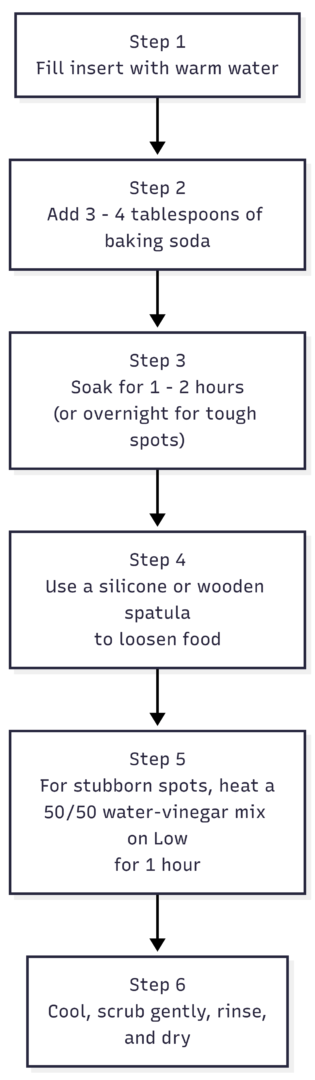
Never use: metal utensils, steel wool, or harsh chemical cleaners inside the ceramic insert. These cause micro-scratches that harbor bacteria and degrade the coating over time.
Removing Odors from Your Slow Cooker
Lingering smells from fish, garlic, or heavily spiced dishes can transfer to your next meal. Here’s how to neutralize them:
| Odor Problem | Solution |
|---|---|
| Mild lingering smell | Wash with warm soapy water; air-dry with lid off |
| Strong food odors | Fill with water + 2 tbsp baking soda; cook on Low 1 hour |
| Acidic/tangy odors | Fill with water + ½ cup white vinegar; cook on Low 1 hour |
| Musty storage smell | Wipe interior with lemon juice; rinse clean |
Key habit: Never store leftover food inside the ceramic insert. Transfer meals to airtight containers and store in the refrigerator. Leaving food in the crock promotes odor absorption and staining.
After cleaning, leave the lid slightly ajar during storage to allow airflow and prevent mustiness.
Cleaning the Heating Base Safely
The heating base is the part most people neglect — and the one that matters most for safety. It contains electrical components, so water and electronics do not mix.
Safe cleaning steps for the heating base:
- Wipe down the interior well and exterior surface with a damp cloth, never a soaking wet one.
- For grease buildup or odors on the base, use a cloth lightly dampened with white vinegar.
- Avoid getting any moisture near the power cord, heating element, or control dial.
- Dry completely before plugging back in.
- Never submerge the heating base in water under any circumstances.
A clean base also prevents the smell of burnt residue from heating up and flavoring your next cook.
Protecting the Nonstick and Ceramic Coating
The ceramic insert’s coating is what makes your slow cooker easy to clean — but it needs to be treated carefully to stay that way.
Do this:
- Use wooden or silicone utensils for stirring and serving
- Allow the insert to come to room temperature before washing
- Apply a light coat of oil if the ceramic looks dry or dull
Avoid this:
- Metal spoons, forks, or ladles that scratch the surface
- Aerosol cooking sprays, which leave a sticky polymer residue that builds up over time
- Sudden temperature changes (hot crock into cold water)
- Running on high heat for extended periods unless the recipe requires it
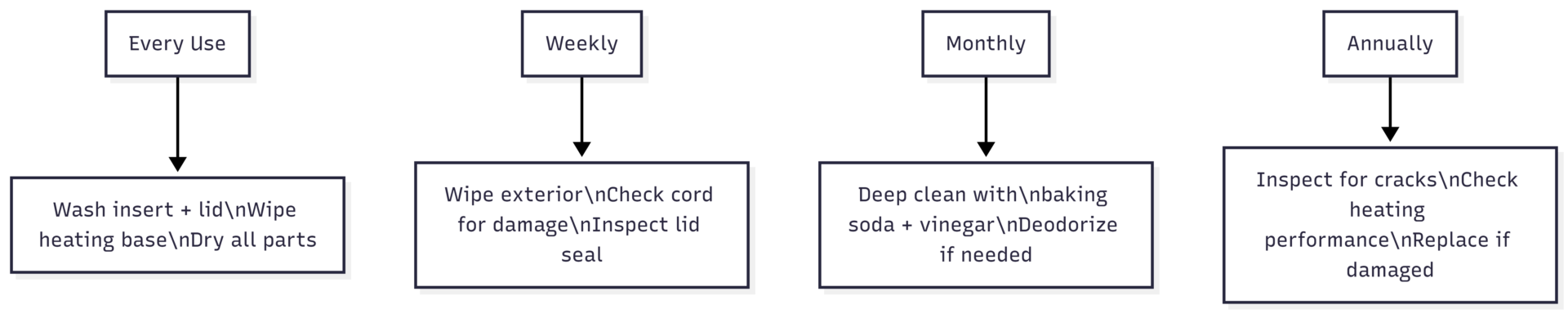
Slow Cooker Maintenance: Cleaning Frequency Guide
Slow Cooker Liners: Worth It or Not?
Slow cooker liners are single-use plastic or nylon bags that fit inside the ceramic insert, making cleanup as simple as lifting out the bag.
| Factor | Liner | No Liner |
|---|---|---|
| Cleanup speed | Very fast | Moderate |
| Environmental impact | High (single-use plastic) | None |
| Cost over time | Ongoing | One-time appliance cost |
| Cooking results | Same | Same |
| Ceramic protection | Yes | Depends on care |
Liners are convenient but not environmentally friendly. They are non-recyclable and non-biodegradable. For most home cooks, the baking soda and vinegar method is an equally fast and sustainable alternative.
Safety Tips for Slow Cooker Care
Following basic safety habits protects both your appliance and your household:
- Always unplug before cleaning. Even if the cooker is off, an unplugged unit is safer to handle.
- Never use the slow cooker if the ceramic insert is cracked. Hairline cracks can harbor bacteria and may worsen under heat, potentially breaking during a cook.
- Do not wrap the cord tightly around the base for storage. This stresses the cord and can damage the insulation over time. Loosely coil and store separately.
- Store in a cool, dry place with the lid off or slightly ajar.
- Check the seal between the lid and the insert periodically. Warped lids can cause moisture loss and uneven cooking.
- Never leave a cracked or chipped ceramic insert in use. Replace it — many manufacturers sell replacement inserts separately and affordably.
Common Slow Cooker Cleaning Questions
Can I put my slow cooker insert in the dishwasher? Most ceramic inserts and glass lids are dishwasher-safe. Always confirm with your manual. Use a gentle cycle to extend the coating’s life.
How do I clean the heating element? You can’t access the heating element directly. Keep the base clean by wiping with a damp cloth after every use and using a vinegar-dampened cloth for grease. Never submerge it.
Why does my slow cooker smell even after washing? Odors embed in the ceramic over time. Run a Low-heat cycle with water and baking soda or vinegar to neutralize smells from the inside out.
How long does a slow cooker last with proper care? With regular cleaning and correct handling, a quality slow cooker lasts 5 to 10 years or more. The ceramic insert is often the first component to fail — avoid thermal shock and abrasive cleaning to maximize its lifespan.
Can I use bleach to clean my slow cooker? No. Bleach can degrade the ceramic coating and leave residue that contaminates food. Stick to baking soda, white vinegar, dish soap, and lemon juice.
Summary: Quick Reference Cleaning Chart
| Task | Frequency | Method |
|---|---|---|
| Wash insert and lid | After every use | Warm soapy water or dishwasher |
| Wipe heating base | After every use | Damp cloth, dry thoroughly |
| Remove burnt food | As needed | Baking soda soak + vinegar heat cycle |
| Deodorize | As needed | Baking soda or vinegar heat cycle |
| Deep clean | Monthly | Vinegar + baking soda on Low for 1 hour |
| Inspect for cracks | Monthly | Visual check of insert and lid |
| Full appliance check | Annually | Cord, seal, heating performance |
A clean slow cooker isn’t just about aesthetics — it’s about food safety, appliance longevity, and getting the best flavor from every meal. The routine is simple: wash after each use, deep clean monthly, protect the ceramic coating, and never submerge the heating base. Follow these steps consistently and your slow cooker will reward you with years of reliable, low-effort cooking.
Please share this How to Clean and Maintain Your Slow Cooker with your friends and do a comment below about your feedback.
We will meet you on next article.
Until you can read, How to Use a Slow Cooker for Parties and Gatherings